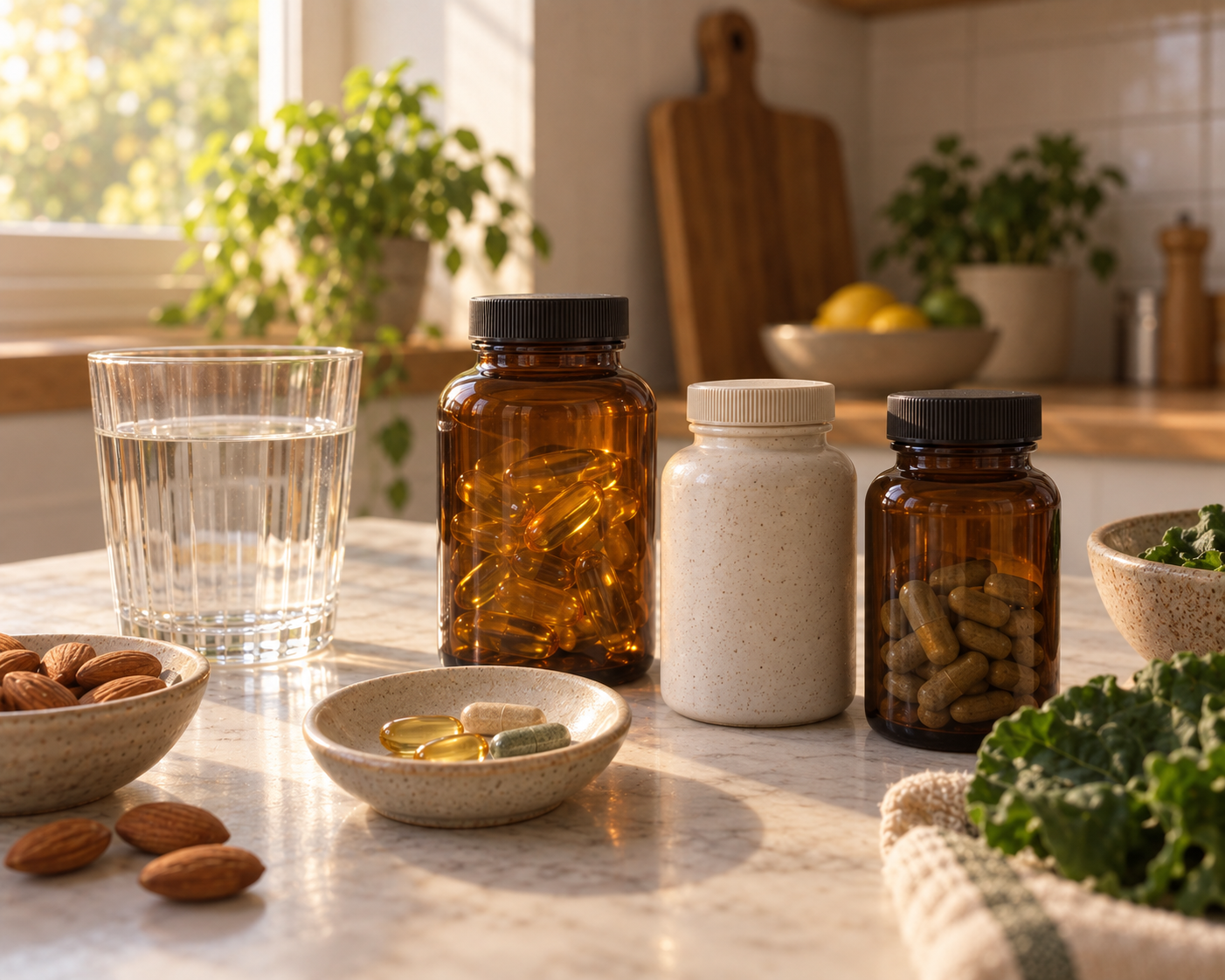
The stomach acid question is the one every probiotic advert answers. Enteric coating, delayed release, "guaranteed to survive to the intestine" — it's the central marketing claim of an entire category, and it invites you to believe that survival is the hard part and the rest takes care of itself.
It isn't, and it doesn't. When researchers actually went and looked — with endoscopy, sampling the gut lining directly rather than guessing from stool — they found the strains had survived the journey perfectly well. What happened next was the interesting part, and it's not what the packaging implies.
The survival question, answered properly
Most well-manufactured probiotic strains reach the intestine alive. A team at the Weizmann Institute, publishing in Cell, gave healthy volunteers an 11-strain probiotic preparation and then performed upper endoscopies and colonoscopies to sample the gut lining directly. They confirmed the probiotics remained viable after gastrointestinal passage.
They also found something more important: the microbiome living on your gut wall only partly resembles the one in your stool. Every consumer microbiome test, and most probiotic research, uses stool. So the thing being measured isn't quite the thing that matters — which is worth remembering next time you're offered a gut test kit.
Key insight: Enteric coating is solving a problem that mostly isn't the limiting one. It's not useless — it just isn't the reason a probiotic works or doesn't.
Why the same probiotic works for your friend and not for you
The same study found people divide into two groups, and which one you're in appears to be decided by your existing microbiome rather than by the product.
✅ Colonisation-permissive
The supplemented strains establish themselves in the gut lining and persist. These are the people for whom probiotics do something measurable.
⚠️ Colonisation-resistant
The existing microbiome largely repels the newcomers. Strains pass through, appear in stool — so you'd think it "worked" — but never take up residence.
The researchers could predict which group someone fell into from their baseline microbiome and host features. You cannot predict it from the label, the CFU count, or the price. And crucially, stool samples suggested colonisation in people whose gut lining told a different story — so the cheap way of checking gives the wrong answer.
This is the honest explanation for why probiotic experiences vary so wildly. It isn't that some people "aren't consistent enough". It's that a meaningful proportion of people are physiologically resistant to the thing they've been sold.
The finding that reverses standard advice
"Take a probiotic while you're on antibiotics" is possibly the most universal supplement advice there is — and a companion study suggests it may come with a cost nobody mentions.
Suez and colleagues, in a paper published alongside the first in Cell, examined what happened after a course of antibiotics. Compared with simply letting the gut recover on its own, taking a multi-strain probiotic delayed the return of the person's own native microbiome — in some cases for months. Autologous faecal transplant, meaning reintroducing the person's own pre-antibiotic microbiome, restored it fastest.
Important balance here, because this finding gets over-extrapolated in both directions. Probiotics have reasonable evidence for preventing antibiotic-associated diarrhoea, which is a real and unpleasant outcome. So this isn't "never take probiotics with antibiotics" — it's that there are two effects pulling in opposite directions, and the standard advice only ever mentions one of them. If you're taking them to avoid diarrhoea, that's an evidence-based reason. If you're taking them to "restore your gut", the picture is murkier than you've been told.
Strain, not species — and what that means for the label
Probiotic effects are strain-specific, which is the single most useful thing to understand when reading a label. Lactobacillus rhamnosus GG and a different L. rhamnosus strain are as functionally different as two unrelated medicines that happen to share a syllable.
This matters because the trials are done on strains. When research shows a benefit for irritable bowel symptoms or antibiotic-associated diarrhoea, it shows it for one specific strain at one specific dose — and a product containing "Lactobacillus blend, 50 billion CFU" inherits none of that evidence.
🔍 What to actually look for
- Full strain IDGenus, species and strain code — e.g. "35624", "GG", "DSM 17938"
- CFU at expiryNot "at time of manufacture" — the two figures can differ enormously
- Matched to purposeA strain studied for your issue — not "gut health" in general
- StorageFollow it — heat kills more organisms than acid does
- IgnoreHuge CFU counts and long strain lists — more isn't better, and dilutes the studied dose
That "CFU at expiry" point is worth dwelling on. Some products declare billions at manufacture and a far smaller guaranteed figure by the best-before date. Both numbers can be honest; only one describes what you'll swallow.
Prebiotics: the boring one with the best evidence
If you want to change your gut microbiome, feeding the bacteria you already have is better supported than importing new ones — and it's the least glamorous option available.
Prebiotics are simply fibres your own enzymes can't digest, which reach the colon intact and get fermented by resident bacteria into short-chain fatty acids. And unlike bacteria, fibre has no survival problem whatsoever: it's meant to pass through the stomach unchanged.
The evidence base here is genuinely strong. A series of systematic reviews and meta-analyses in The Lancet pooled roughly 135 million person-years across 185 prospective studies and 58 clinical trials. Comparing the highest fibre consumers with the lowest showed a 15–30% reduction in all-cause and cardiovascular mortality, and lower incidence of coronary heart disease, stroke, type 2 diabetes and colorectal cancer. Benefits were greatest at 25–29g a day, with dose-response curves suggesting more may be better still.
Most people in the UK and US eat under 20g. That gap is a larger, better-evidenced opportunity than anything in the supplement aisle — and it costs the price of beans.
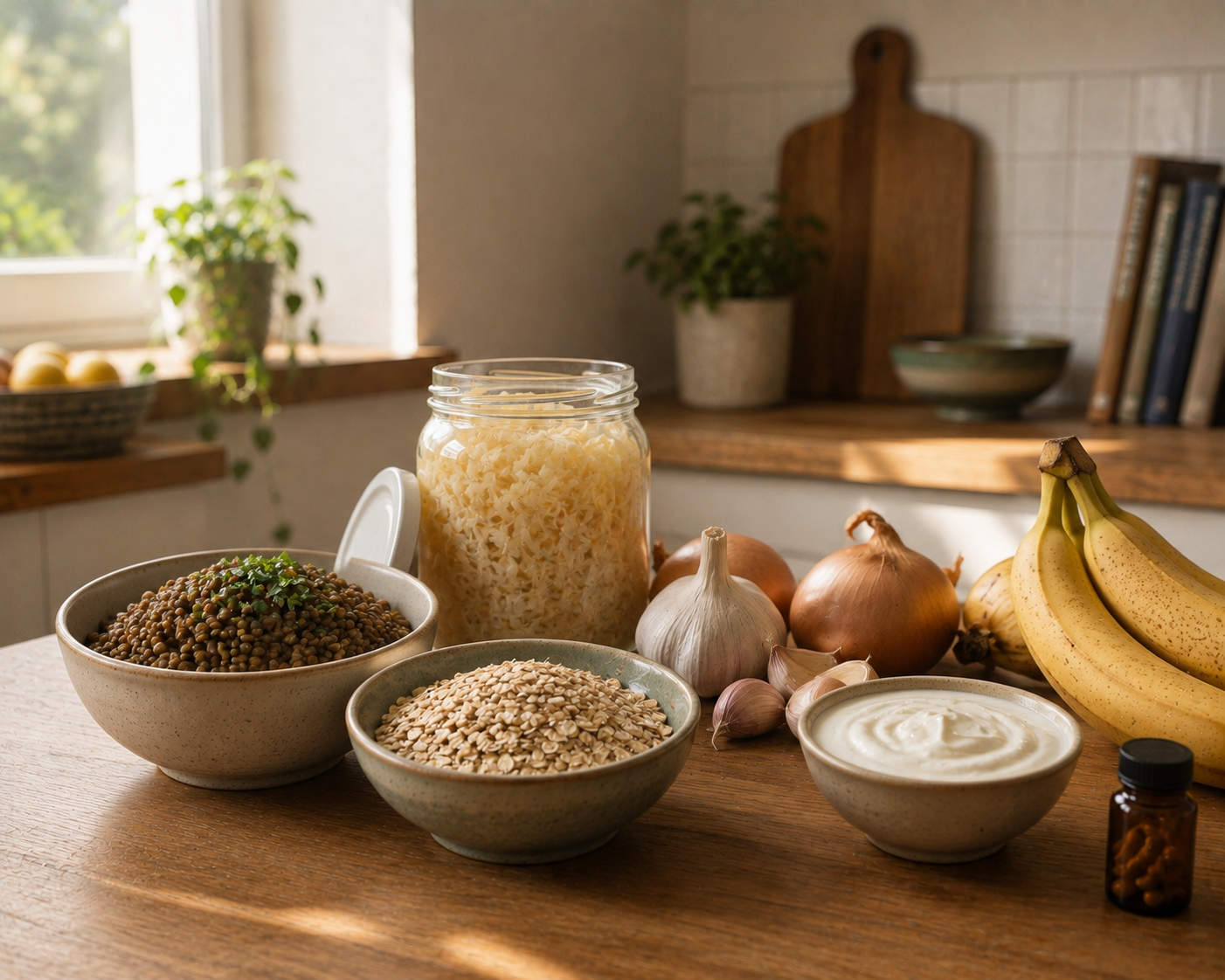
Food sources beat powders for variety: legumes, oats, whole grains, onions, garlic, leeks, slightly-underripe bananas, cold cooked potato and pasta. Aim for a range of plants rather than a lot of one. If you're increasing fibre, do it gradually over a few weeks — a sudden jump reliably produces the bloating people then blame on the fibre itself.
Digestive enzymes: the irony in the title
Enzymes are proteins, and your stomach is extremely good at destroying proteins — which makes "does it survive stomach acid?" a much sharper question for enzyme supplements than for the bacteria the question is usually asked about.
The honest summary is short. There are two contexts with clear evidence:
- Lactase for lactose intolerance. Well established, works by breaking down lactose in the meal itself, and is genuinely useful if dairy causes you problems.
- Pancreatic enzyme replacement therapy for diagnosed pancreatic insufficiency — from chronic pancreatitis, cystic fibrosis, or pancreatic surgery. This is prescription treatment for a specific diagnosis, not a supplement.
Beyond those, broad over-the-counter enzyme blends marketed for bloating and "food digestion" are poorly supported by good trials. A healthy pancreas already produces these enzymes in substantial excess. Adding a small quantity of enzyme, much of which won't survive the stomach, to a system that isn't short of them is unlikely to do much.
Worth taking seriously: persistent bloating, pain, changes in bowel habit, unintended weight loss, or blood in your stool need investigating — not supplementing. Conditions like coeliac disease, IBD and pancreatic insufficiency are diagnosable and treatable, and reaching for enzyme capsules can delay that. See your GP.
So what would a sensible approach look like?
Roughly in order of expected return:
- Fibre first, from food. Diversity of plants, built up gradually, aiming towards 25–30g a day. This is the highest-evidence, lowest-cost intervention available. If you struggle to get there from food alone, a psyllium supplement such as NOW Foods Psyllium Husk Powder is well-tolerated and adds soluble fibre — with plenty of water, and started small.
- Fermented foods. Yoghurt with live cultures, kefir, sauerkraut, kimchi. Cheaper than capsules, and they arrive with food rather than in isolation.
- A strain-specific probiotic, for a specific reason. If you have a defined problem — IBS symptoms, antibiotic-associated diarrhoea — pick a strain studied for it rather than a generic blend. Align is an example of a single, well-characterised strain with a body of research behind it, rather than a long ingredient list.
- Lactase, if dairy is the issue. The one enzyme with a clear use case for otherwise healthy people.
- Everything else in the aisle. Treat with scepticism until you see a strain code and a trial.
Also worth remembering: sleep, alcohol, stress and physical activity all influence the gut, and none of them come in a capsule. We put probiotics on our shortlist of genuinely useful supplements in the only 4 supplements most people actually need — this article is the more sceptical companion to that one.
How to tell whether something is working
Give any change eight to twelve weeks, and track symptoms rather than beliefs — because gut symptoms fluctuate enough that a fortnight of anything can look like success.
What's worth recording: bloating and its timing, stool consistency and regularity, abdominal discomfort, and what you actually ate. That last one matters because the most common cause of a dramatic improvement isn't the capsule — it's the dietary change someone made at the same time and forgot about.
Logging food alongside symptoms over a couple of months is what separates the two, and it's exactly the sort of slow, multi-variable pattern Health Mentor AI is built to hold onto. It also makes a GP or dietitian appointment considerably more productive if you do need one.
And the summary worth keeping: your probiotic almost certainly survives your stomach acid. Whether it does anything afterwards depends on a strain code you probably didn't check and a personal biology nobody can currently test for at home. Meanwhile the intervention with the strongest evidence in this entire category is eating more beans — which is a deeply unglamorous conclusion, and the one the data actually supports.
Frequently Asked Questions
Do probiotics survive stomach acid?
Largely yes. In a study using endoscopy to sample the gut directly, researchers found that an 11-strain probiotic preparation remained viable after passing through the gastrointestinal tract. Survival turns out not to be the main obstacle — whether the strains then establish themselves in the gut lining is, and that varies enormously between people.
Why do probiotics work for some people and not others?
Research using direct gut sampling found people fall into roughly two groups: colonisation-permissive individuals, whose gut lining accepts the supplemented strains, and colonisation-resistant individuals, whose existing microbiome largely repels them. Which group you fall into was predictable from your baseline microbiome and host features, but not from stool testing alone.
Should you take probiotics after antibiotics?
It is less clear-cut than usually presented. One study found that taking a multi-strain probiotic after antibiotics actually delayed the return of the person's own native gut microbiome compared with letting it recover naturally. Probiotics do have good evidence for preventing antibiotic-associated diarrhoea, so the two effects need weighing rather than assuming benefit.
Do digestive enzyme supplements work?
For most healthy people there is little good evidence. The clear exceptions are lactase for lactose intolerance, and prescription pancreatic enzyme replacement for diagnosed pancreatic insufficiency. Broad over-the-counter enzyme blends marketed for bloating are poorly supported, and persistent digestive symptoms warrant investigation rather than supplementation.
Scientific References
- Zmora et al. (2018), Cell — Personalized gut mucosal colonization resistance to empiric probiotics is associated with unique host and microbiome features
- Suez et al. (2018), Cell — Post-antibiotic gut mucosal microbiome reconstitution is impaired by probiotics and improved by autologous FMT
- Reynolds et al. (2019), The Lancet — Carbohydrate quality and human health: a series of systematic reviews and meta-analyses
- Nature Microbiology (2021) — Probiotics impact the antibiotic resistance gene reservoir along the human GI tract in a person-specific and antibiotic-dependent manner
- Reynolds et al. (2020), PLOS Medicine — Dietary fibre and whole grains in diabetes management: systematic review and meta-analyses
Products Mentioned in This Article
Two products were referenced. Food covers most of this — neither is essential.
NOW Foods Psyllium Husk Powder
A well-tolerated soluble fibre for closing the gap towards 25–30g a day when food alone isn't getting you there. Start with a small amount and build up, always with plenty of water. Avoid if you've had swallowing difficulties or oesophageal narrowing.
View on Amazon →Align Probiotic (Bifidobacterium 35624)
Included as an example of the right shape of product rather than a universal recommendation: a single, fully identified strain with a research history, rather than a long list of species without strain codes. Whether it helps you specifically depends on factors nobody can currently test at home.
View on Amazon →As an Amazon Associate, we earn from qualifying purchases. This comes at no additional cost to you.