
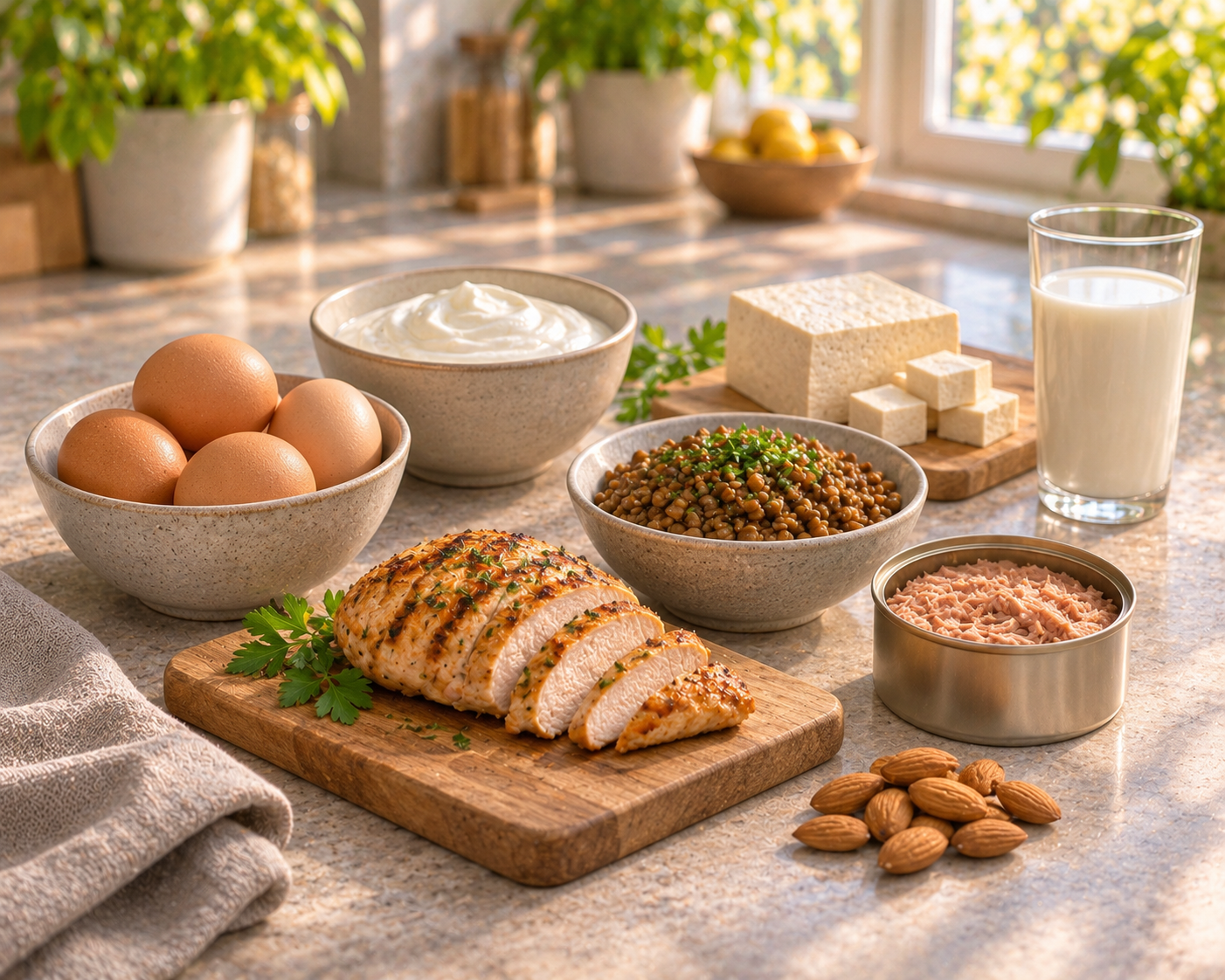
You've decided to eat more protein. Maybe you've started lifting, you're trying to lose fat without losing muscle, or you've read that protein matters more as you age. Then you look at your plate and realise you have no idea how much is actually on it. Is two eggs a lot? What about a bowl of lentil soup, or a chicken sandwich?
This practical guide gives you the protein content of everyday foods in realistic portions, explains how much you need per meal, and shows how to build meals that hit your target without needing a spreadsheet.
How much protein do you need a day?
The UK Reference Nutrient Intake is 0.75 g of protein per kilogram of body weight per day, around 52 g for a 70 kg adult. That's set to meet the needs of most healthy people, but active adults, people building muscle, those losing weight and older adults often benefit from more.
The British Nutrition Foundation sets out the UK reference intake. For older adults, the PROT-AGE expert group recommended at least 1.0–1.2 g/kg a day to help maintain muscle and function. For people who strength train, research suggests benefits for muscle level off at around 1.6 g/kg a day, as we covered in what to eat before and after a workout.
🎯 Daily protein targets (examples for a 70 kg adult)
- UK reference intake0.75 g/kg, around 52 g a day
- Over 651.0–1.2 g/kg, around 70–85 g a day
- Active or losing weight1.2–1.6 g/kg, around 85–110 g a day
- Building muscleAround 1.6 g/kg and up, around 110 g+ a day
How much protein should you eat per meal?
Around 0.4 g per kg of body weight per meal, across at least three or four meals, is a practical target. For most adults that's roughly 25–40 g per meal. Spreading protein through the day tends to work better than cramming most of it into dinner.
A review in the Journal of the International Society of Sports Nutrition recommended around 0.4 g/kg per meal across at least four meals to reach a daily intake of at least 1.6 g/kg, with up to 0.55 g/kg per meal for those aiming higher. Many people eat plenty of protein at dinner but very little at breakfast, which is the easiest meal to improve.
How much protein is in everyday foods?
Here are approximate values for typical portions. Figures vary between brands and cooking methods, so check labels where you can. Values are based on standard food composition data from USDA FoodData Central and the UK Composition of Foods Integrated Dataset, plus product labels.
🍗 Meat and fish
- Chicken breast120 g cooked: about 37 g
- Pork tenderloin120 g cooked: about 31 g
- Lean beef mince (5% fat)125 g raw: about 27 g
- Cod120 g cooked: about 27 g
- Salmon fillet120 g cooked: about 26 g
- Tinned tuna in water100 g drained (about a small tin): about 25 g
- Cooked prawns80 g: about 13–18 g, depending on the product
🥚 Eggs and dairy
- Greek-style 0% yoghurt170 g pot: about 17 g
- Skyr150 g: about 16 g
- Cottage cheese150 g: about 14–17 g
- Eggs2 large: about 12–13 g
- Semi-skimmed milk250 ml glass: about 9 g
- Cheddar30 g: about 7.5 g
🌱 Plant sources
- Tempeh100 g: about 20 g
- Firm tofu100 g: about 12–17 g, depending on the brand
- Lentils (cooked)150 g: about 13.5 g
- Kidney beans (cooked)120 g: about 10 g
- Chickpeas (tinned, drained)120 g (half a tin): about 8–11 g
- Baked beansHalf a 415 g tin: about 10 g
- Edamame80 g: about 9.5 g
🥜 Nuts, grains and extras
- Whey protein30 g scoop: about 20–25 g, depending on the product
- Peanut butter2 tablespoons (30 g): about 7 g
- Almonds30 g handful: about 6 g
- Quinoa (cooked)150 g: about 6.5 g
- Porridge oats40 g dry: about 5 g
- Wholemeal bread1 slice (40 g): about 4 g
Key insight: Nuts, bread and grains contribute protein, but not much per portion. To reach 30 g at a meal, you'll almost always need a main protein source such as meat, fish, eggs, dairy, tofu or a generous serving of pulses.
Is plant protein as good as animal protein?
Plant protein can absolutely meet your needs, but per gram it's generally slightly less digestible and lower in some essential amino acids than animal protein. Eating a variety of plant proteins and slightly larger portions closes the gap.
The UN's Food and Agriculture Organization recommends measuring protein quality using DIAAS, a method that accounts for both amino acid content and digestibility, in its 2013 report on protein quality. Generally, dairy, eggs, meat and soy score highly, while many other plant proteins score lower on their own. Combining sources, such as beans with rice or lentils with bread, helps balance the amino acids.
What does a 30 g protein meal look like?
Pair one main protein source with something extra. Here are some simple combinations that land at around 25–40 g.
- Breakfast: 170 g Greek-style yoghurt, 30 g oats and a few berries (about 22 g), or 3 eggs on a slice of wholemeal toast (about 23 g). Add a glass of milk to either for around 9 g more.
- Lunch: a small tin of tuna on two slices of wholemeal bread with salad (about 33 g), or a large bowl of lentil and vegetable soup with a slice of bread and some cheese (about 25 g).
- Dinner: 120 g chicken breast with rice and vegetables (about 40 g), or a tofu and edamame stir-fry with 150 g tofu and 80 g edamame (about 30 g).
- Snacks: 150 g cottage cheese with fruit (about 15 g), or a protein bar such as Quest Nutrition Protein Bars (about 20 g) when you're on the go.
Protein doesn't have to be expensive either. Eggs, tinned fish, frozen chicken, dried lentils and Greek-style yoghurt are among the best value per gram, as we showed in protein on a budget.
Why does protein matter so much?
Protein supports muscle repair and growth, helps preserve muscle when you're losing weight, keeps you fuller than carbohydrate or fat, and becomes more important as you age. It's the nutrient most people benefit from paying attention to.
We covered protein's effect on appetite and long-term health in why protein decides how you age, and how high protein helps people build muscle while losing fat in can you build muscle and lose fat at the same time.
How can you hit your protein target consistently?
Plan a protein source for every meal, front-load breakfast, and keep a few high-protein standbys in the fridge. Most people discover their gap is at breakfast and lunch, not dinner.
Health Mentor AI makes this easier. Log your meals by searching, scanning a barcode or snapping a photo, and you can see how much protein you're actually eating each day. Its AI tools can design a meal plan around your protein target, suggest quick high-protein meals when you're short on ideas, and turn the plan into a grocery list. You can also ask the AI mentor which of your usual meals are lowest in protein and how to boost them.
Get the app and find out how close you really are to your target.
Frequently Asked Questions
How much protein do I need a day?
The UK Reference Nutrient Intake is 0.75 grams per kilogram of body weight per day, about 52 grams for a 70 kg adult. Active adults, people losing weight or building muscle, and older adults often benefit from more: around 1.0 to 1.2 g/kg for over-65s, and around 1.2 to 1.6 g/kg or more for active people.
How much protein should I eat per meal?
Around 0.4 grams per kilogram of body weight per meal, across at least three or four meals, is a practical target. For most adults this is roughly 25 to 40 grams per meal. Spreading protein through the day tends to work better than eating most of it at dinner.
How much protein is in two eggs?
Two large eggs contain about 12 to 13 grams of protein. To reach a 25 to 30 gram breakfast, pair them with another protein source such as Greek-style yoghurt, milk, cottage cheese or smoked salmon.
Which everyday foods are highest in protein?
Per typical portion, chicken breast (about 37 g per 120 g cooked), pork tenderloin, lean beef mince, white and oily fish, and tinned tuna (about 25 g per small tin) are among the highest. Greek-style yoghurt, skyr, cottage cheese, tempeh, tofu and cooked lentils are also good sources.
Is plant protein as good as animal protein?
Plant protein can fully meet your needs, but many plant sources are slightly less digestible and lower in some essential amino acids. Soy foods such as tofu and tempeh score well. Eating a variety of plant proteins, combining sources such as beans and grains, and using slightly larger portions closes the gap.
Scientific References
- British Nutrition Foundation — Nutrition requirements
- Schoenfeld & Aragon (2018), Journal of the International Society of Sports Nutrition — How much protein can the body use in a single meal for muscle-building? Implications for daily protein distribution
- Bauer et al. (2013), Journal of the American Medical Directors Association — Evidence-based recommendations for optimal dietary protein intake in older people: a position paper from the PROT-AGE Study Group (summary)
- FAO (2013) — Dietary protein quality evaluation in human nutrition
- USDA FoodData Central
- Public Health England — Composition of Foods Integrated Dataset (CoFID)
Products Mentioned in This Article
Whole foods should do most of the work. A protein bar is a convenient backup for busy days.
Quest Nutrition Protein Bars (Ultimate Variety Pack)
Around 20 g of protein per bar in a format that keeps in a bag or desk drawer. Useful for topping up a low-protein lunch or bridging a long gap between meals.
View on Amazon →As an Amazon Associate, we earn from qualifying purchases. This comes at no additional cost to you.