You know the feeling. It's around 3 PM, your eyes feel heavy, the words on your screen blur together, and all you can think about is coffee or something sweet. This afternoon slump feels like it comes out of nowhere — but for many people, the real trigger was set hours earlier, at breakfast. What you eat at 8 AM helps decide how sharp, or how foggy, you feel at 3 PM.
The good news is that the 3 PM energy crash isn't a fixed part of your day. Once you understand how breakfast, blood sugar and your body clock interact, you can build a morning meal that keeps your energy on an even keel — no vending-machine rescue mission required. Let's unpack the biology and, more importantly, what to do about it.
What actually causes the afternoon slump?
The afternoon slump has two overlapping causes: your natural circadian rhythm and your blood sugar. In the early afternoon, your body clock briefly lowers alertness and core temperature — a built-in dip that happens even if you eat perfectly. On top of that, the rise and fall of blood glucose from earlier meals can either soften that dip or turn it into a heavy crash.
Think of it as a baseline lull that your food choices amplify or calm. You can't switch off your circadian rhythm, but you have a lot of influence over the blood-sugar half of the equation. That's where breakfast comes in — because the meal that starts your day sets the tone for the glucose swings that follow.
How is your 3 PM crash linked to your 8 AM breakfast?
Breakfast shapes your afternoon through a pattern known as the "sugar spike and dip." A meal high in refined carbohydrate pushes blood glucose up quickly. Your body responds with a surge of insulin, which can overshoot — pulling glucose down not just to normal, but slightly below your starting point a couple of hours later. That dip is where fatigue, foggy focus and fresh hunger tend to appear.
This isn't just theory. In one of the largest studies of its kind, researchers tracking more than 1,000 people with continuous glucose monitors found that the size of the glucose dip two to three hours after a standardised meal predicted appetite and energy better than the initial peak. Analysis in Nature Metabolism showed that people with the biggest dips reported more hunger, slightly lower alertness, reached for their next meal sooner, and ate meaningfully more over the following day.
🍩 The spiky breakfast
Refined carbs (sugary cereal, white toast, pastry, juice) shoot glucose up fast. Insulin overshoots, glucose dips below baseline around 2–3 hours later — cue hunger, low mood and the mid-afternoon fog.
🥚 The steady breakfast
Protein, fibre and fat slow digestion, so glucose rises gently and comes down gently. No dramatic dip means fewer cravings and steadier focus through the afternoon.
Key insight: It's not the sugar high that leaves you drained — it's the dip that follows it. A flatter glucose curve, not a bigger breakfast, is what protects your afternoon.
Why does a high-carb breakfast make it worse?
A breakfast dominated by refined carbohydrate is essentially a fast-burning fuel. It's digested quickly, floods the bloodstream with glucose, and burns out just as fast — leaving little in reserve for the afternoon. The steeper the rise, the steeper the fall, and the more likely you are to feel that crash and start craving another quick hit of sugar or caffeine.
Protein changes this dynamic in a useful way. In a controlled crossover study using continuous glucose monitoring, published in the journal Nutrients, a high-protein breakfast lowered the blood-sugar response after breakfast — and even blunted the glucose spike after lunch several hours later. That "second-meal effect" means a smarter breakfast can pay off well beyond the morning.
What should you eat for breakfast to avoid the crash?
The goal is a flatter glucose curve, and the way to get there is a breakfast built around three things: protein, fibre and some healthy fat, with slower-releasing carbohydrates instead of refined ones. This combination slows digestion, softens the spike, and prevents the sharp dip that drags your afternoon down.
Practically, that looks like:
- Lead with protein (aim for ~25–30g). Eggs, Greek yoghurt, cottage cheese, a protein shake or tofu all work. Protein is the most powerful lever for steadier energy and satiety.
- Choose slow carbs over fast ones. Swap sugary cereal or white toast for something like Bob's Red Mill Steel Cut Oats, which release their energy more gradually than instant or highly processed grains.
- Add fibre and fat. A spoonful of Nutiva Organic Chia Seeds stirred into oats or yoghurt adds soluble fibre that slows glucose absorption, while nuts or nut butter provide steadying fat.
- Go easy on liquid sugar. Fruit juice and sweetened coffees deliver fast glucose with little to slow it down — a classic spike-and-dip setup.
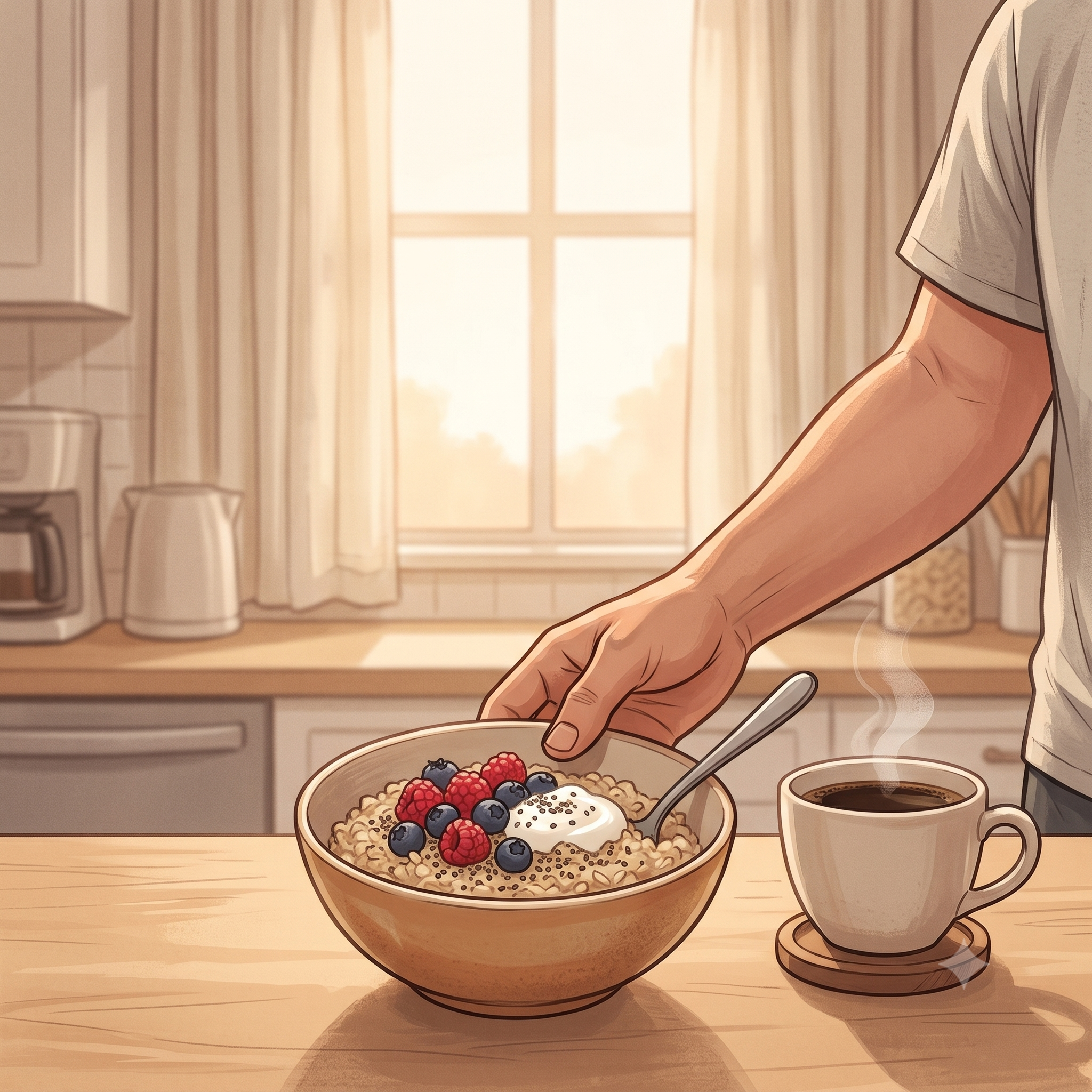
A simple template: a bowl of steel-cut oats cooked with chia seeds, topped with Greek yoghurt, berries and a few nuts. It's slow-releasing, protein-rich and fibre-dense — the opposite of a sugar bomb.
Does breakfast really affect your focus, not just your energy?
Yes — the same blood-sugar swings that sap your energy can nudge your concentration too, though the effect is subtle rather than dramatic. Steadier glucose gives your brain a more consistent fuel supply, which tends to support sustained attention across a long afternoon.
A review of breakfast and cognition in adults, published in Advances in Nutrition, found that meals releasing glucose more slowly were associated with better performance on some memory and attention tasks, particularly in people with poorer blood-sugar control. Separately, a randomised trial in the journal Physiology & Behavior found a protein-rich breakfast improved cognitive concentration and satiety before lunch compared with a high-carbohydrate one. The research is still evolving, but the direction is consistent: steadier fuel, steadier focus.
How to build a crash-proof morning that sticks
Knowing the science is one thing; making it a habit is another. The most reliable way to beat your afternoon slump is to find your personal pattern, then make the better breakfast the easy default. Here's how to put it into practice.
- Track the link for yourself. For a week, jot down what you eat for breakfast and rate your energy at 3 PM. Patterns emerge fast — and seeing your own crash triggers is far more motivating than any general rule. This is exactly the kind of connection Health Mentor AI is built to surface: log your meals and energy, and let it highlight which breakfasts leave you flagging by mid-afternoon.
- Prep to remove friction. Overnight oats or a grab-and-go yoghurt pot means the steady option is ready before decision fatigue kicks in.
- Consider going deeper with data. If you're curious about your own glucose swings, an over-the-counter monitor like the Dexcom Stelo Glucose Biosensor lets you see in real time how different breakfasts spike or steady your blood sugar. Note that it's designed for adults not on insulin, and you shouldn't make medical decisions from it without professional guidance.
- Mind the whole day. Breakfast sets the tone, but a refined-carb lunch can trigger its own crash. The same protein-and-fibre principle applies at every meal.
If hunger and cravings are a bigger part of your picture, it's worth understanding the hormones behind them — our guide to the satiety secret and your hunger hormones digs into why some meals leave you satisfied and others don't.
Frequently Asked Questions
Why do I get so tired at 3 PM every day?
The mid-afternoon dip is partly natural — your body clock lowers alertness in the early afternoon. But a sharp blood-sugar rise and fall from what you ate earlier can deepen it, turning a mild lull into a heavy energy crash and brain fog.
Can breakfast really cause an afternoon energy crash?
Yes, indirectly. A breakfast heavy in refined carbohydrate can spike your blood sugar, then trigger an insulin-driven dip below baseline a couple of hours later. Research links these larger post-meal glucose dips to more hunger and slightly lower alertness — a recipe for a slump.
What is the best breakfast to avoid the afternoon slump?
Aim for a breakfast built around protein (roughly 25–30g), fibre and some healthy fat, with slower-releasing carbohydrates rather than refined ones. Think eggs with oats and chia, or Greek yoghurt with nuts and berries. This flattens the glucose curve and steadies energy for hours.
Does skipping breakfast help or hurt afternoon energy?
It varies by person. Skipping breakfast avoids a morning glucose spike, but many people overeat refined carbs at lunch and crash afterwards instead. If you eat breakfast, its composition matters more than simply whether you eat it. Tracking your own pattern is the fastest way to find out.
Scientific References
- Wyatt et al. (2021), Nature Metabolism — Postprandial glycaemic dips predict appetite and energy intake in healthy individuals
- Nutrients (2023) — Effect of a High Protein Diet at Breakfast on Postprandial Glucose Levels, measured by continuous glucose monitoring
- Advances in Nutrition — The Effects of Breakfast and Breakfast Composition on Cognition in Adults
- Physiology & Behavior — A protein-rich breakfast enhances satiety and cognitive concentration before lunch: a randomised controlled crossover study
Products Mentioned in This Article
These products were referenced throughout the article to support your steady-energy breakfast routine.
Bob's Red Mill Steel Cut Oats
A slow-releasing, minimally processed whole grain that makes an ideal breakfast base — its gradual energy release helps flatten the morning glucose curve compared with instant or sugary cereals.
View on Amazon →Nutiva Organic Chia Seeds
A convenient source of soluble fibre and healthy fats. Stirred into oats or yoghurt, chia seeds slow glucose absorption and add staying power to breakfast — a simple way to soften the spike.
View on Amazon →Dexcom Stelo Glucose Biosensor
An over-the-counter continuous glucose monitor (for adults not on insulin) that lets you see how different breakfasts affect your own blood sugar in real time — useful for spotting your personal crash triggers.
View on Amazon →As an Amazon Associate, we earn from qualifying purchases. This comes at no additional cost to you.