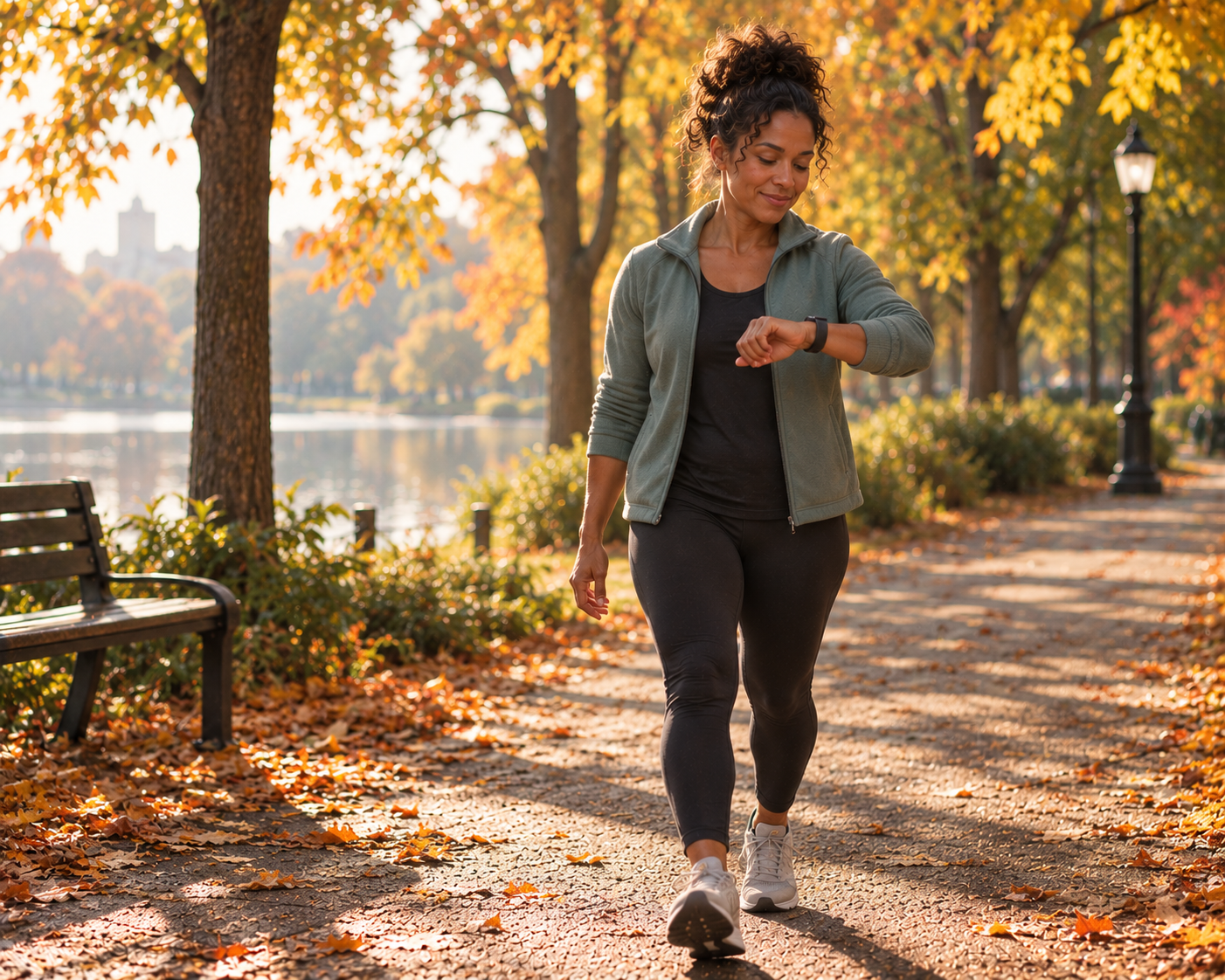
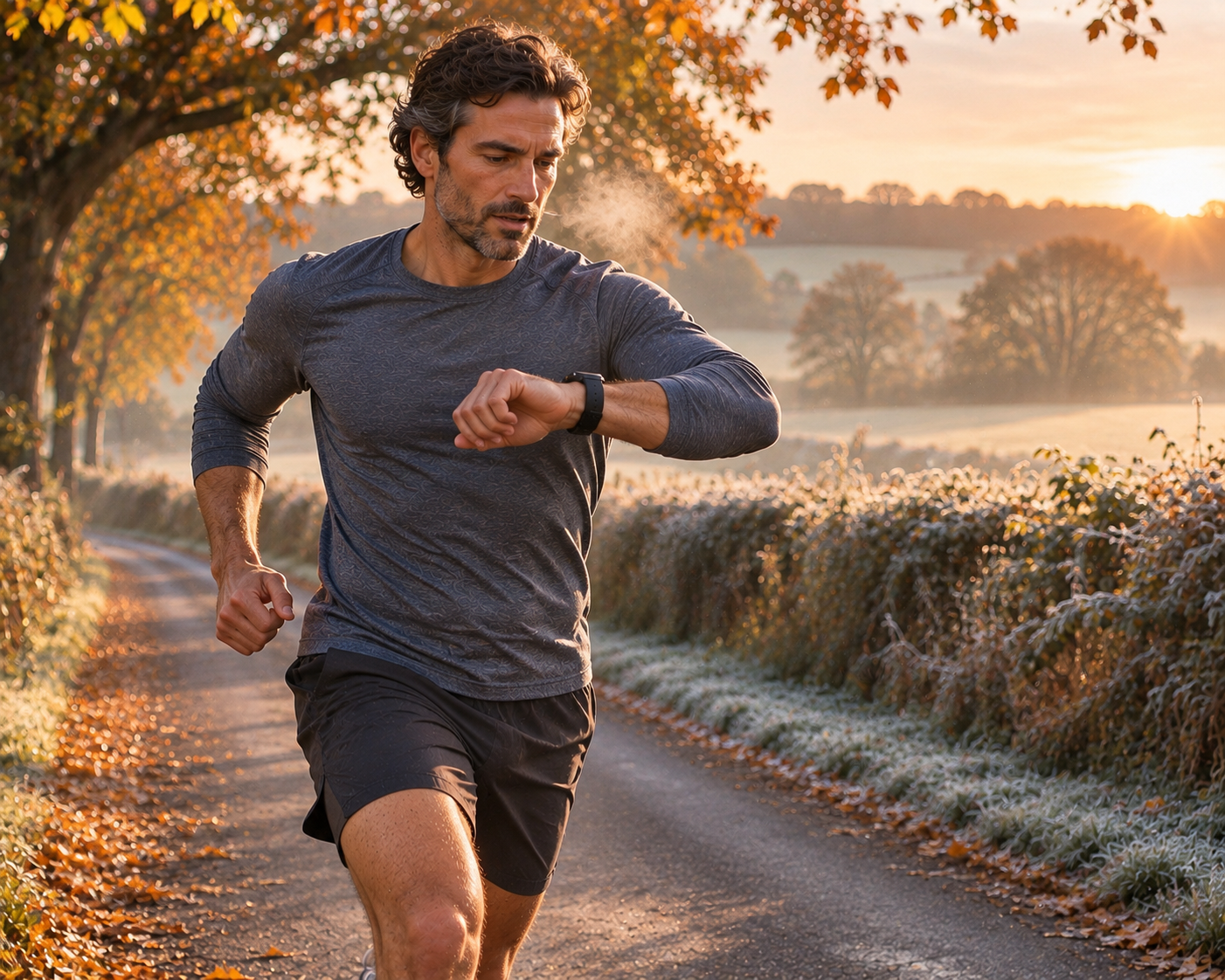
Your watch has started showing a new number: VO2 max, 38. It's coloured amber and labelled "fair" for your age. You're not entirely sure what it means, whether it's accurate, or whether you should care. You walk the dog, you go to the gym twice a week. Surely that's enough?
VO2 max is worth caring about. It's one of the most powerful predictors of how long and how well you'll live, and unlike your genes or your age, you can change it. This guide explains what VO2 max is, why it matters so much for longevity, how accurate your watch's estimate is, and how to improve it.
What is VO2 max?
VO2 max is the maximum rate at which your body can take in, transport and use oxygen during intense exercise. It's measured in millilitres of oxygen per kilogram of body weight per minute (mL/kg/min), and it reflects how well your heart, lungs, blood and muscles work together.
The gold-standard test involves running or cycling to exhaustion in a lab while wearing a mask that measures your breathing. Most people today see an estimate instead, calculated by a smartwatch from heart rate and pace or power during exercise. Fitness is also sometimes expressed in METs, where 1 MET is roughly 3.5 mL/kg/min.
Why is VO2 max such a strong predictor of longevity?
Because it captures so much of your overall health in one number: heart function, blood vessel health, lung capacity, muscle quality and metabolic health. In large studies, low cardiorespiratory fitness is linked to a risk of death comparable to, or greater than, well-known risk factors such as smoking and diabetes.
The most striking data comes from a study of 122,007 patients who underwent treadmill testing, published in JAMA Network Open. Over a median of 8.4 years, people in the lowest fitness group had about five times the risk of death of those in the "elite" fitness group. According to the American College of Cardiology's review of the study, the risk associated with low fitness was comparable to or greater than that of smoking, diabetes and coronary artery disease. There was no upper limit at which more fitness stopped helping.
Earlier, a meta-analysis of 33 studies and 102,980 participants in JAMA found that each 1-MET higher level of fitness was associated with 13% lower all-cause mortality and 15% lower risk of cardiovascular disease.
Key insight: You don't need to become an athlete. Some of the biggest gains come from moving out of the lowest fitness group. Going from "poor" to "below average" roughly halved the risk of death in the treadmill study.
What is a good VO2 max for my age?
"Good" depends on your age and sex, and most watches compare you with others like you. As a rough guide, many healthy adults in their 30s to 50s fall somewhere in the 30s to 40s mL/kg/min, with women typically a few points lower than men, and regular endurance exercisers often higher.
More useful than any category, though, is your own trend. Because VO2 max predicts health at every level, improving yours by a few points is worthwhile wherever you start. Moving up by one fitness category is the meaningful goal, not reaching an arbitrary number.
How does VO2 max change with age?
It declines gradually with age, and the decline speeds up later in life. The good news is that regular training slows the decline, so fit older adults can have a higher VO2 max than inactive people decades younger.
A long-term study in Circulation found peak oxygen uptake fell by around 3–6% per decade in people's 20s and 30s, accelerating to more than 20% per decade from their 70s onwards. Men's decline sped up earlier than women's. That accelerating curve is one of the strongest arguments for building fitness in midlife: the higher you start, the longer you stay above the level needed for an independent, active old age.
How accurate is your smartwatch's VO2 max estimate?
Reasonably good for tracking your own trend, less reliable as an absolute number. Watch estimates can be off by 10–15% or more for an individual, but if you wear the same device consistently, the direction of change is still useful.
In a 2025 validation study published in PLOS ONE, Apple Watch VO2 max estimates had an average error of about 13% compared with lab testing, and tended to underestimate VO2 max by around 6 mL/kg/min. Accuracy varies between devices and individuals.
- Use it for trends, not to compare yourself with others or with a lab result.
- Keep conditions consistent: estimates usually improve when you regularly do outdoor runs or walks with GPS and a good heart rate signal.
- Get tested properly if you want an accurate baseline. Some gyms, universities and sports clinics offer lab tests.
How do you improve your VO2 max?
Combine plenty of easy aerobic exercise with some harder intervals. Both raise VO2 max, and interval training produces slightly larger gains per session. Most people can see measurable improvements within six to twelve weeks of consistent training.
A meta-analysis of 28 studies in Sports Medicine found interval training improved VO2 max by around 5.5 mL/kg/min and continuous endurance training by around 4.9 mL/kg/min, compared with no exercise. That's more than one full MET, a meaningful change for long-term health.
One of the most studied interval sessions is the "4×4". In a trial published in Medicine & Science in Sports & Exercise, eight weeks of four four-minute hard intervals, three times a week, raised VO2 max by about 8%, more than steady running at the same total effort.
🫁 A simple weekly plan to raise VO2 max
- 2–3 easy sessions30–60 minutes of walking, cycling, jogging or swimming at a conversational pace. See Zone 2 training.
- 1 interval sessionThe 4×4: after a warm-up, 4 minutes hard (breathing heavily, able to say only a few words), 3 minutes easy, repeated four times.
- Daily movementWalking adds to your aerobic base. See how many steps a day you need.
- Progress graduallyAdd a little time or intensity every couple of weeks, and take an easier week every month or so.
If you're new to exercise, start with the easy sessions for a few weeks before adding intervals. If you have a heart condition, high blood pressure or other health concerns, check with your GP before starting hard interval training. Our guide to how long it takes to see results from cardio covers what to expect along the way.
How should you track your fitness?
Watch your VO2 max estimate over months, alongside your resting heart rate and how a familiar session feels. Together they give a far more reliable picture than any single reading.
A GPS running watch such as the Garmin Forerunner 55 estimates VO2 max from your runs and tracks heart rate around the clock.
Health Mentor AI syncs health data from Apple Health or Health Connect and brings it together with your workouts, sleep and the app's longevity score. Your cardio sessions sit alongside your strength training, so you can see the full picture of what you're doing and how your fitness is responding. Ask the AI mentor how your recent training compares with last month, and you'll get an answer from your own data. We explain why your resting heart rate trend matters too in what is a good resting heart rate.
The bottom line
VO2 max is one of the best single measures of how well your body is ageing, and one of the most changeable. You don't need elite fitness; moving up even one category brings real benefits. Build an aerobic base, add one hard session a week, and track the trend for three months. Get the app and start building yours.
Frequently Asked Questions
What is VO2 max?
VO2 max is the maximum rate at which your body can take in, transport and use oxygen during intense exercise, measured in millilitres of oxygen per kilogram of body weight per minute. It is the standard measure of cardiorespiratory fitness and reflects how well your heart, lungs, blood and muscles work together.
Why is VO2 max linked to longevity?
Higher cardiorespiratory fitness is strongly associated with lower risk of death. In a study of 122,007 patients, the least fit had about five times the mortality risk of the fittest, and a meta-analysis found each 1-MET increase in fitness was linked to 13 percent lower all-cause mortality and 15 percent lower cardiovascular risk.
How accurate is a smartwatch VO2 max estimate?
Smartwatch estimates are useful for tracking trends but less reliable as absolute numbers. In a 2025 study, Apple Watch estimates had an average error of about 13 percent compared with lab testing and tended to underestimate VO2 max. Wearing the same device consistently and watching the trend over months is the best approach.
How can I improve my VO2 max?
Combine regular easy aerobic exercise with some interval training. A meta-analysis found interval training raised VO2 max by around 5.5 mL/kg/min and continuous training by around 4.9 mL/kg/min. A practical plan is two or three easy sessions and one interval session, such as four four-minute hard efforts, each week.
Does VO2 max decline with age?
Yes. One long-term study found it fell by around 3 to 6 percent per decade in people's 20s and 30s, accelerating to more than 20 percent per decade from their 70s. Regular training slows this decline, and fit older adults can have a higher VO2 max than inactive people decades younger.
Scientific References
- Mandsager et al. (2018), JAMA Network Open — Association of cardiorespiratory fitness with long-term mortality among adults undergoing exercise treadmill testing
- American College of Cardiology — Cardiorespiratory fitness and long-term mortality (review of Mandsager et al.)
- Kodama et al. (2009), JAMA — Cardiorespiratory fitness as a quantitative predictor of all-cause mortality and cardiovascular events in healthy men and women: a meta-analysis
- Fleg et al. (2005), Circulation — Accelerated longitudinal decline of aerobic capacity in healthy older adults
- Lambe et al. (2025), PLOS ONE — Validity of Apple Watch VO2 max estimates
- Milanović, Sporiš & Weston (2015), Sports Medicine — Effectiveness of high-intensity interval training and continuous endurance training for VO2max improvements
- Helgerud et al. (2007), Medicine & Science in Sports & Exercise — Aerobic high-intensity intervals improve VO2max more than moderate training
Products Mentioned in This Article
You can improve VO2 max without any gadgets. A watch helps you see the trend.
Garmin Forerunner 55 GPS Running Watch
An entry-level GPS running watch that tracks pace, distance and heart rate, and estimates VO2 max from your runs. Simple to use, with long battery life, and a sensible step up from a basic fitness band.
View on Amazon →As an Amazon Associate, we earn from qualifying purchases. This comes at no additional cost to you.