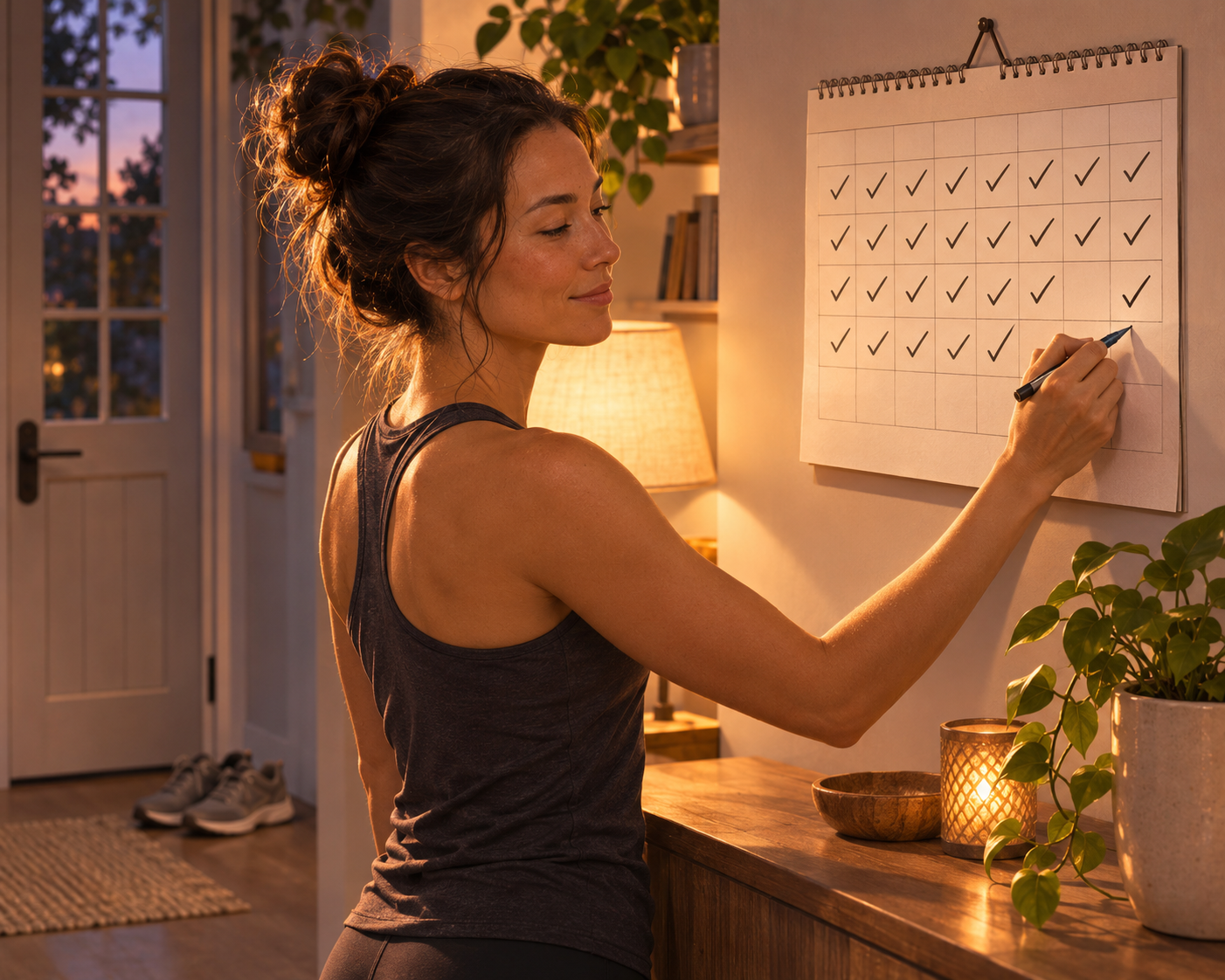

It starts in late November with the first work do. Then come the mince pies in the office, the tins of chocolates at home, a run of late nights, and three different Christmas dinners with different sides of the family. By the time January arrives, your routine is a distant memory and the jeans feel tight.
Christmas is meant to be enjoyed, and it should be. The goal isn't to spend December saying no to everything. It's to enjoy the occasions that matter without letting the whole month quietly undo the progress you've made. This guide shows you how, using what the research says about where holiday weight gain really comes from.
How much weight do people gain over Christmas?
Less than most people think, but it tends to stick. In a well-known study of 195 adults, the average gain over the six-week holiday period was about 0.37 kg (0.8 lb). The problem was that it wasn't lost over the following year.
That study, published in The New England Journal of Medicine, found the holiday gain made up a large share of participants' weight gain over the whole year. A third of a kilo is nothing on its own. Repeated every year for twenty years, it adds up.
Christmas Day itself is a big one. The University of Birmingham notes that people can consume around 6,000 calories on the day. But one day, however indulgent, has little lasting effect on its own. It's the weeks around it that matter.
Where does Christmas weight gain really come from?
Mostly from the drift from occasion to season. The open tins, the leftovers, extra drinks on ordinary weeknights, later nights, and several weeks without training. Each one is small, but together they change your average day for a month or more.
- Grazing: chocolates, crisps and biscuits within arm's reach all day.
- Drinks: a pint of 4% lager is about 180 kcal, a glass of champagne about 86 kcal and a measure of cream liqueur around 175 kcal, according to Drinkaware. A few a night soon adds up.
- Less sleep: late nights increase appetite the next day. A meta-analysis in the European Journal of Clinical Nutrition found partial sleep deprivation led people to eat about 385 kcal more per day, with no matching increase in energy use.
- Less movement: no commute, no gym, lots of sitting.
Key insight: Christmas Day isn't the problem. The other 30 days of December are. Protect the ordinary days and the special ones can stay special.
Does anything actually prevent Christmas weight gain?
Yes, and it's surprisingly simple. In a randomised trial, people who weighed themselves regularly and received a few practical tips gained no weight over Christmas, while a comparison group gained about 0.4 kg. Nobody was put on a diet.
The trial, published in The BMJ, included 272 adults. The intervention group was encouraged to weigh themselves at least twice a week, given ten simple weight-management tips, and shown how much activity it takes to burn off festive foods. For example, a mince pie takes about 21 minutes of running to burn off. The difference between groups was about half a kilo. It's a modest number, but the effort involved was tiny.
How can you enjoy Christmas without losing your progress?
Decide which days genuinely matter, enjoy those fully, and keep a few simple anchors in place on the days in between. You don't need to track every mince pie; you need to stop December becoming one long weekend.
🎄 Your Christmas anchors
- Pick your big daysChristmas Day, Boxing Day, New Year's Eve, the work party. Enjoy them without guilt.
- Move every dayA walk after the big meal is a tradition worth keeping, and light walking after eating helps lower blood sugar. Even 20–30 minutes counts.
- Keep two sessionsTwo short workouts a week keep the habit alive, even if they're 20 minutes at home.
- Protein at breakfastEggs, yoghurt or leftovers like turkey. It makes grazing-heavy days easier to manage.
- Put the tins awayOut of sight, out of mind. Keep treats in a cupboard, not on the coffee table.
- Alternate drinksA glass of water or a soft drink between alcoholic drinks.
- Protect some sleepYou won't get early nights every night, but try not to stack several late ones in a row. See how much sleep you need.
- Weigh in occasionallyA couple of times a week, as feedback, not a verdict.
The research behind the walking point comes from a meta-analysis in Sports Medicine, which found that light walking breaks lowered blood glucose and insulin responses compared with prolonged sitting. A family walk after dinner is a good way to put it into practice. For more on staying active through the season, see how many steps a day you need.
How do you handle parties and family dinners?
Eat normally beforehand rather than "saving" calories, have a plan for drinks and second helpings, and focus on the people rather than the food. Arriving starving is the fastest route to overeating.
We covered this in detail in social pressure and dieting, including how to politely decline food without causing offence. The short version: say "I don't" rather than "I can't", compliment the cook, and remember that most people notice far less about your plate than you think.
What if you overdo it?
Go back to normal at your very next meal. Don't skip meals, don't punish yourself with extreme workouts, and don't wait until January to restart. One big day doesn't need correcting; it only becomes a problem if it turns into a week.
This is where the "what the hell" effect can catch people out: after one indulgent day, it's tempting to write off the rest of the month. We explain how to avoid that in why streaks work, and what to do when you break one, and in why you keep starting over every Monday.
How can you keep training when you're away?
Pack a minimum. If you're visiting family, a set of resistance bands and a 20-minute bodyweight routine are enough to keep your strength and your habit going. A light set such as Fit Simplify Resistance Loop Exercise Bands fits in any bag. For no-equipment routines, see building strength without a gym.
Health Mentor AI makes the season easier to manage without turning it into a chore. You can snap a photo of a meal to log it in seconds, ask for quick meal ideas to use up leftovers, and let the AI design a short workout around whatever equipment you have at your in-laws'. Your streaks keep you showing up, and the app includes options to protect a streak, so a hectic day around Christmas doesn't have to wipe out months of consistency.
The bottom line
Enjoy Christmas. Enjoy the dinners, the drinks and the time off. Just don't let December become a month-long free-for-all. Keep a few simple anchors, move every day, and get straight back to normal after the big days. You'll reach January still feeling like yourself, with nothing to start over. Get the app and keep your routine ticking over through the festive season.
Frequently Asked Questions
How much weight do people gain over Christmas?
Less than most people think. In a study of 195 adults, average weight gain over the six-week holiday period was about 0.37 kg (0.8 lb). However, the gain was not lost over the following year, so small annual gains can add up over time.
How can I avoid gaining weight at Christmas?
Enjoy the key occasions and keep simple anchors on the days in between: daily walks, two short workouts a week, a protein-led breakfast, treats kept out of sight, alternating alcoholic drinks with water, and weighing yourself a couple of times a week. In a randomised trial, regular weighing plus simple tips prevented Christmas weight gain.
How many calories do people eat on Christmas Day?
Estimates suggest around 6,000 calories on Christmas Day once breakfast, dinner, drinks and snacks are included. However, one indulgent day has little lasting effect on its own. Weight gain over the festive period comes mainly from weeks of extra snacking, drinks, late nights and reduced activity.
Should I skip meals before a Christmas party?
No. Arriving very hungry makes overeating more likely. Eat normally during the day and have a protein-rich snack before you go, so you can make choices rather than react. If you overdo it, simply return to normal at your next meal rather than skipping food to compensate.
How do I keep exercising over Christmas?
Aim for a daily walk, especially after big meals, and keep two short workouts a week, even if they are 20 minutes at home. A set of resistance bands and a simple bodyweight routine are enough when travelling. The goal is to keep the habit alive rather than to train as much as usual.
Scientific References
- Yanovski et al. (2000), The New England Journal of Medicine — A prospective study of holiday weight gain
- Mason et al. (2018), The BMJ — Effectiveness of a brief behavioural intervention to prevent weight gain over the Christmas holiday period: randomised controlled trial
- Al Khatib et al. (2017), European Journal of Clinical Nutrition — The effects of partial sleep deprivation on energy balance: a systematic review and meta-analysis
- Buffey et al. (2022), Sports Medicine — The acute effects of interrupting prolonged sitting time in adults with standing and light-intensity walking on biomarkers of cardiometabolic health
- Drinkaware — What's in your favourite Christmas drink?
Products Mentioned in This Article
The best Christmas fitness kit is a pair of walking shoes. If you're travelling, this keeps strength training possible anywhere.
Fit Simplify Resistance Loop Exercise Bands (Set of 5)
Five loop bands from extra light to extra heavy in a small carry bag. Enough for a full 20-minute workout in a spare room, and light enough to pack for every trip over the festive season.
View on Amazon →As an Amazon Associate, we earn from qualifying purchases. This comes at no additional cost to you.