You carry a water bottle everywhere, you hit your daily target, and yet you're still tired, headachey, and weirdly thirsty. If that sounds familiar, you may be making the most common hydration mistake there is: drinking plenty of water but almost no electrolytes. It turns out that "just drink more water" is only half the story — and the missing half is why you can feel dehydrated despite doing everything right.
Hydration isn't simply about how much fluid goes in; it's about how much your body actually holds on to. Here's what's really going on, why more water isn't always better, and the simple changes that finally make your hydration stick.
Why are you still dehydrated even though you drink lots of water?
The short answer: water alone isn't enough to keep you hydrated. Your body holds on to fluid using electrolytes — mainly sodium and potassium — which pull water into your cells and keep it in your bloodstream. When you drink a lot of plain water without them, much of it simply passes through and out as urine rather than being retained where you need it.
This is why you can sip all day and still feel parched. If your diet is low in salt, or you sweat heavily, or you're drinking large volumes of nothing but water, you can effectively dilute and flush your electrolytes — leaving you under-hydrated at a cellular level even though the bottle keeps emptying.
What actually keeps you hydrated (it's not just water)
What keeps you hydrated is the combination of fluid and electrolytes, because the electrolytes are what let your body retain the fluid. Researchers even have a way to measure this: the beverage hydration index, which compares how much of a drink your body holds on to versus plain water two hours after drinking it.
In these studies, drinks containing electrolytes or a little protein — such as oral rehydration solutions and milk — were retained significantly better than plain water. A review published in the journal Nutrients concluded that electrolyte content is the single biggest factor determining how well a beverage hydrates you at rest. Plain water rushes in and out; add a pinch of the right minerals and it lingers.
The fix in one line: It's not "drink more water" — it's "help the water stay." A small amount of sodium and potassium turns the water you already drink into hydration that actually lasts.
Can you drink too much water?
Yes — though for healthy people it's uncommon and takes real effort. Drinking extreme volumes very quickly can dilute the sodium in your blood, a condition called hyponatremia, or "water intoxication." As your blood sodium drops, water shifts into cells and they swell, which can cause headaches, nausea, confusion and, in severe cases, far worse.
The reassuring part: healthy kidneys can excrete a large amount of water, so this generally only happens with very high intakes over a short period rather than normal daily drinking. As one clinical review noted, problems typically arise when intake is extraordinarily large — often more than a litre per hour. The practical takeaway isn't to fear water; it's to stop force-drinking well past thirst, and to include electrolytes if you're drinking a lot.
Signs you're making the water mistake
Under-hydration despite drinking plenty tends to show up in familiar, easy-to-miss ways:
- Persistent thirst even though you've been drinking all day.
- Low energy, headaches or brain fog that don't match your sleep or food.
- Muscle cramps or twitches, a classic sign of low electrolytes.
- Very frequent, very clear urine — a hint you're flushing more than you're absorbing.
Urine colour is a handy at-a-glance check. Pale, straw-yellow is the sweet spot; dark suggests you need more fluid, while completely clear can mean you're overdoing plain water and washing minerals out.
too much
ideal
good
drink up
dehydrated
How to actually hydrate: the fixes
Hydrating properly is less about drinking more and more about drinking smarter, so your body retains what you give it. These changes do most of the work.
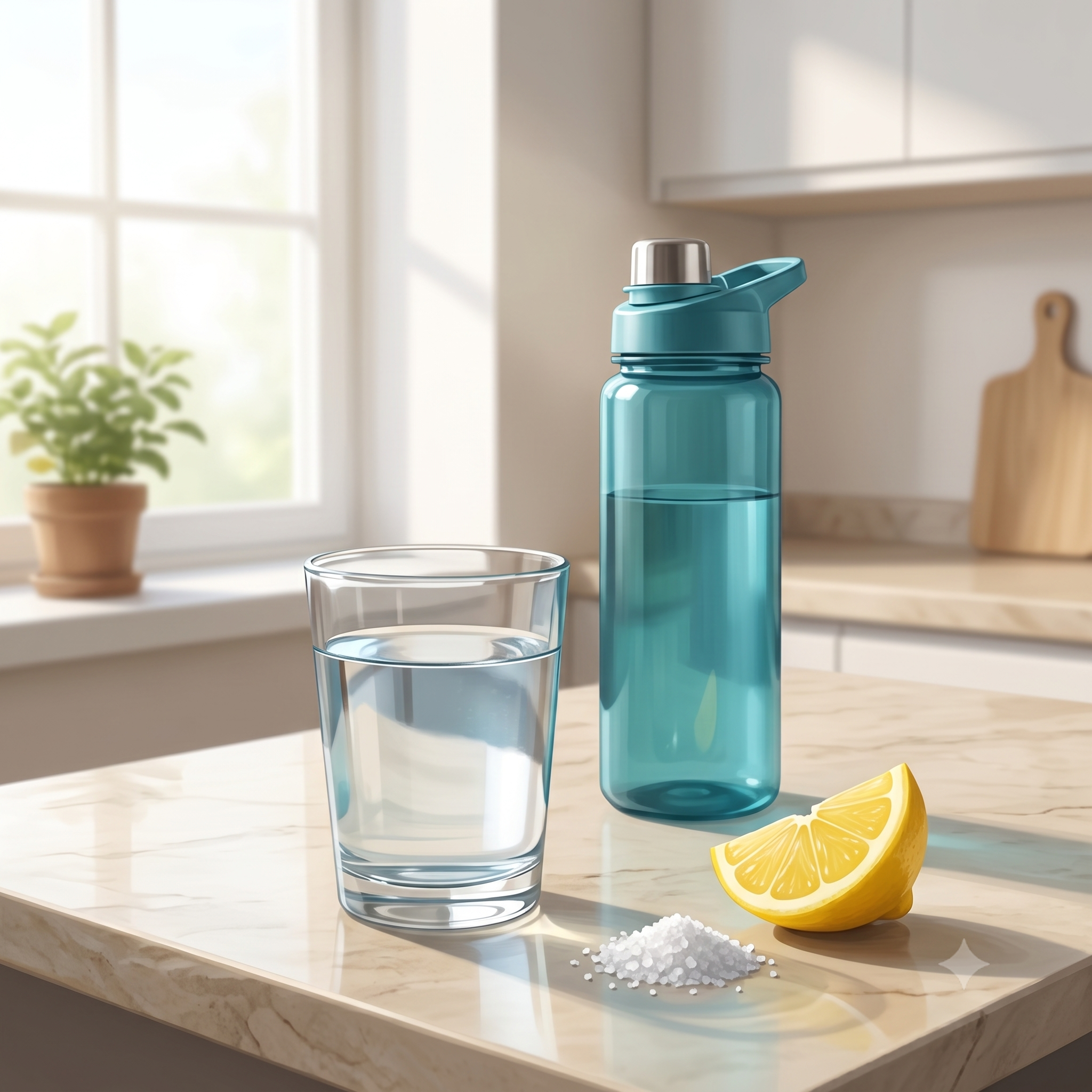
- Add electrolytes when it counts. On hot days, after exercise, or when you're drinking a lot, add a serving of an electrolyte mix like LMNT, or a few trace mineral drops in your bottle. Even a pinch of sea salt and a squeeze of citrus works.
- Sip steadily, don't chug. Large volumes at once mostly exit as urine. Spreading the same amount across the day lets far more of it be absorbed. A bottle with volume markings, like an insulated Iron Flask, makes steady sipping easier to keep up.
- Eat your water. Fruits and vegetables like cucumber, watermelon, oranges and soups come bundled with fluid and potassium — hydration and electrolytes in one.
- Drink to thirst, plus a glass on waking. Thirst is a reliable guide for most people; front-load a glass first thing to top up after a night's fluid loss.
- Mind caffeine and alcohol. Both nudge you toward fluid loss, so pair them with water rather than relying on them for hydration.
If you're not sure whether hydration is behind your low energy or headaches, it helps to track your intake alongside how you feel. Health Mentor AI can log your fluids, energy and symptoms together, making it easy to spot whether the fix is simply better hydration. For more on beating that mid-afternoon dip, see our guide to the 3 PM energy slump.
Frequently Asked Questions
Why am I still dehydrated even though I drink lots of water?
Because hydration isn't only about water — it's about water plus electrolytes. Without enough sodium and potassium, a lot of the plain water you drink passes straight through as urine instead of being retained in your cells, so you can drink all day and still feel thirsty, tired and headachey.
Do I really need electrolytes, or is water enough?
For everyday, moderate activity, water plus a normal diet is usually enough. But if you sweat heavily, exercise a lot, drink very large volumes of plain water, or eat a low-sodium diet, adding electrolytes helps your body actually hold on to the fluid you drink.
Can you drink too much water?
Yes, though it's uncommon in healthy people. Drinking extreme amounts very quickly — well beyond thirst — can dilute your blood sodium, a condition called hyponatremia. Healthy kidneys can handle a lot, so this usually only happens with very high intakes over a short time.
What's the best way to stay hydrated?
Sip steadily rather than chugging, drink to thirst plus a glass on waking, include water-rich foods, and add electrolytes when you're sweating or drinking a lot. Pale-yellow urine is a good sign; completely clear can mean you're overdoing plain water.
Scientific References
- American Journal of Clinical Nutrition — Beverage hydration index: electrolyte-containing drinks are retained better than water
- Nutrients (2021) — The Beverage Hydration Index: Influence of Electrolytes, Carbohydrate and Protein
- Acute Water Intoxication with Hypo-Osmolar Hyponatremia — dilutional hyponatremia from excessive water intake
Products Mentioned in This Article
These products were referenced throughout the article to help you hydrate more effectively.
LMNT Zero-Sugar Electrolyte Drink Mix (Variety Pack)
A sugar-free electrolyte mix with a meaningful dose of sodium, potassium and magnesium per stick — an easy way to help your body retain the water you drink, especially around exercise or hot weather.
View on Amazon →Trace Minerals ConcenTrace Drops
Concentrated ionic trace-mineral drops you can add to any bottle of water — a low-cost, unflavoured way to remineralise plain or filtered water and top up electrolytes throughout the day.
View on Amazon →Iron Flask Insulated Stainless Steel Water Bottle
A durable, insulated bottle that keeps drinks cold for hours and makes steady sipping through the day effortless — the simplest way to build a consistent hydration habit.
View on Amazon →As an Amazon Associate, we earn from qualifying purchases. This comes at no additional cost to you.