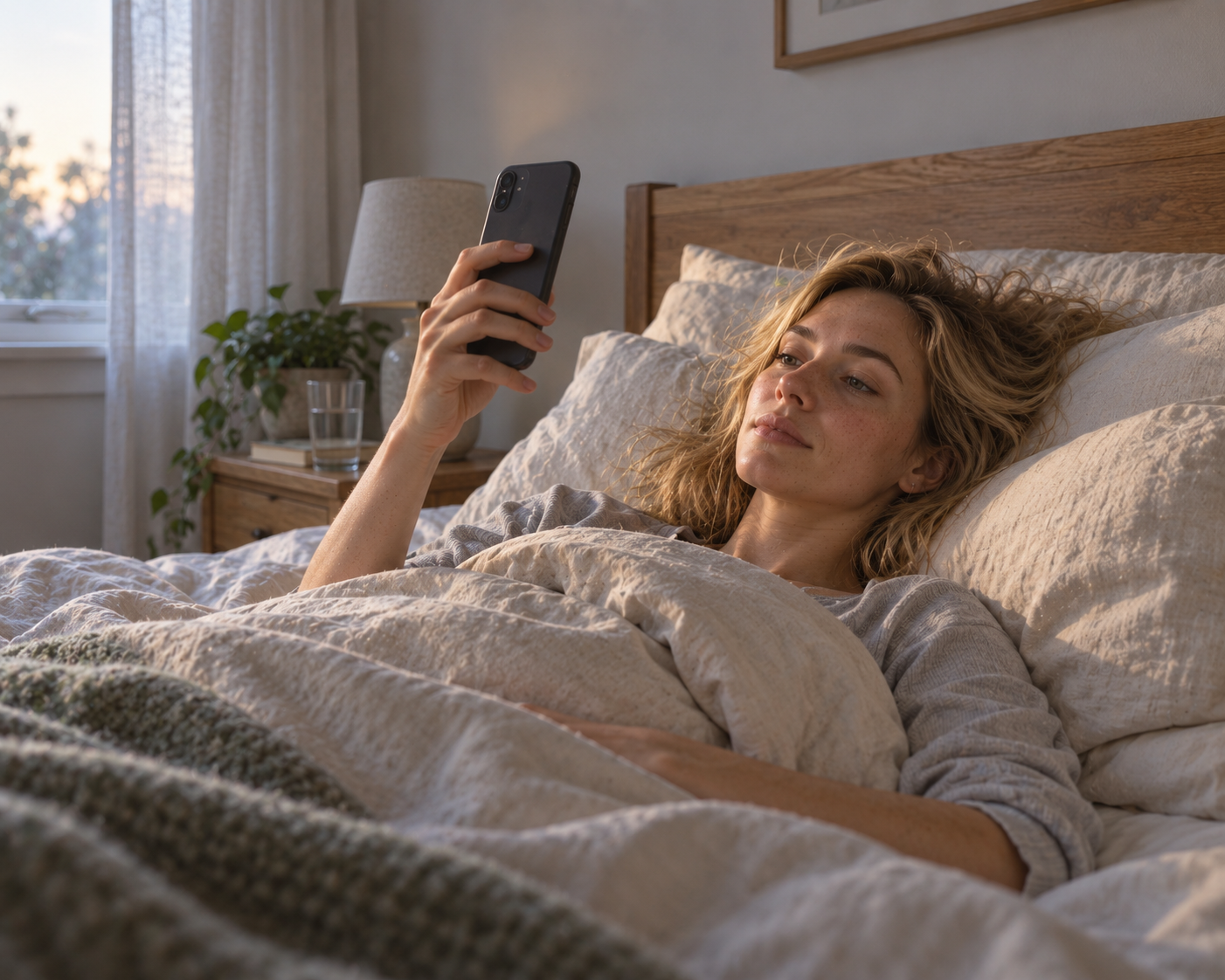
You get into bed at eleven, tired. At half past you're still awake, running through tomorrow: the 9am call, the email you forgot to send, whether there's milk. You check your phone to see the time, which turns into twenty minutes of scrolling. Then the alarm goes, you hit snooze, and the day starts already behind.
Most advice about morning energy focuses on the morning: cold showers, sunlight, the perfect breakfast. Those help (we covered the evidence in the 10-minute morning protocol), but by the time your alarm goes, most of the result is already settled. How quickly you fell asleep, how well you slept and whether your body clock was ready to wake were largely decided the evening before. This evening routine for better sleep takes ten minutes, and every step in it has research behind it.
Why does your evening decide your morning energy?
Because morning energy is mostly the output of the night before. How quickly you fall asleep, how much good-quality sleep you get, and how well your body clock lines up with your alarm all depend on what happens in the hour before bed. A rough evening produces a groggy morning, however good your morning routine is.
Three things do most of the damage in a typical evening. A busy mind keeps you awake. Bright light, from both lamps and screens, tells your brain it's still daytime and delays the release of melatonin. And a bedtime that drifts by an hour or two from night to night leaves your body clock guessing when morning is. The ritual below targets all three in ten minutes.
Does writing a to-do list before bed help you sleep?
Yes. In a sleep-lab study, people who spent five minutes writing a to-do list for the coming days fell asleep about ten minutes faster than people who wrote about tasks they'd already completed. The more specific the list, the faster they fell asleep, which suggests that getting tomorrow out of your head and onto paper quiets the mind.
The study, published in the Journal of Experimental Psychology: General, used polysomnography (the gold-standard measure of sleep, with electrodes rather than self-report) on 57 healthy adults aged 18 to 30. Each spent five minutes writing before lights out. The to-do list group fell asleep in around 15 minutes on average, compared with around 25 for the completed-tasks group.
The likely reason is that unfinished tasks hang around in your mind. Writing them down, with enough detail that you trust you won't forget them, gives your brain permission to stop rehearsing them. A vague list ("work stuff") doesn't do it. A specific one ("email Sarah the Q3 numbers before 10") does.
Key insight: Journaling about what went well today is pleasant, but in this study it was the list of what's still to do that helped people sleep. Offload what's undone, not what's finished.
A cheap notebook that lives on your bedside table, like the Moleskine Classic Notebook, works better than your phone's notes app here, for a reason the next two sections make obvious.
How much does evening light affect sleep?
More than most people realise. Ordinary indoor lighting in the hours before bed delays and suppresses melatonin, the hormone that signals to your body that night has started. That pushes your body clock later, so you feel less sleepy at bedtime and groggier when the alarm goes.
In a study of 116 healthy adults published in The Journal of Clinical Endocrinology & Metabolism, exposure to typical room light (under 200 lux) before bedtime, compared with dim light, delayed melatonin onset in 99% of participants and shortened the duration of melatonin production by about 90 minutes. The researchers described it as shortening the body's internal sense of how long the night is.
That's ordinary room light, not a floodlit kitchen. You don't need to sit in the dark. Switching from overhead lights to a couple of low, warm lamps for the last hour of the evening is enough to cut light levels sharply.
Is reading on your phone before bed really that bad?
The evidence suggests it costs you both at night and the next morning. In a controlled study, people who read on a light-emitting tablet before bed took longer to fall asleep, had less REM sleep, had delayed melatonin, and took longer to become alert the next morning than when they read a printed book.
That study, published in PNAS, had 12 adults read for several hours before bed on an iPad for five nights and from a printed book for five nights, in random order. On the iPad nights they took nearly ten minutes longer to fall asleep and were sleepier the following morning. It's a small study, but it's one of the few to measure the morning after, which is exactly what this article is about.
Real life adds a second problem the lab doesn't capture: phones are designed to keep you engaged. Twenty minutes of "just checking the time" pushes back your bedtime as well as your melatonin. The simplest fix is to charge your phone somewhere other than your bedside table, which is also why the to-do list goes on paper.
The 10-minute evening ritual
Start it about an hour before you plan to sleep. The ritual takes ten minutes, and its effects carry through the hour that follows.
🌙 Ten minutes, five steps
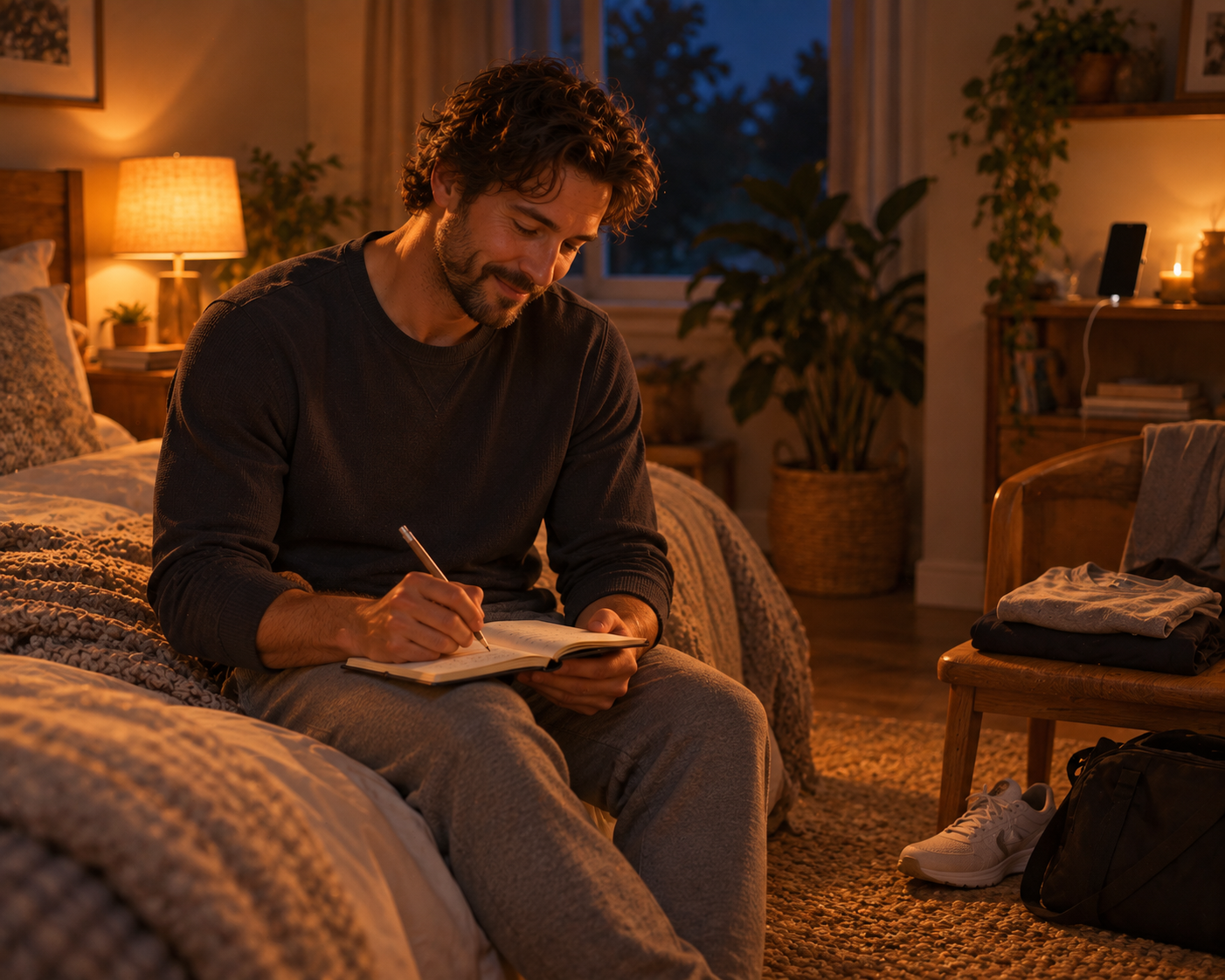
- Minutes 1–5: The listWrite tomorrow's to-do list on paper. Be specific: who, what, by when. Put the hardest task first so tomorrow-you doesn't have to decide.
- Minutes 6–7: Set up the morningLay out clothes or gym kit, fill a water bottle, and decide breakfast. Every decision made now is one your groggy morning self doesn't have to make.
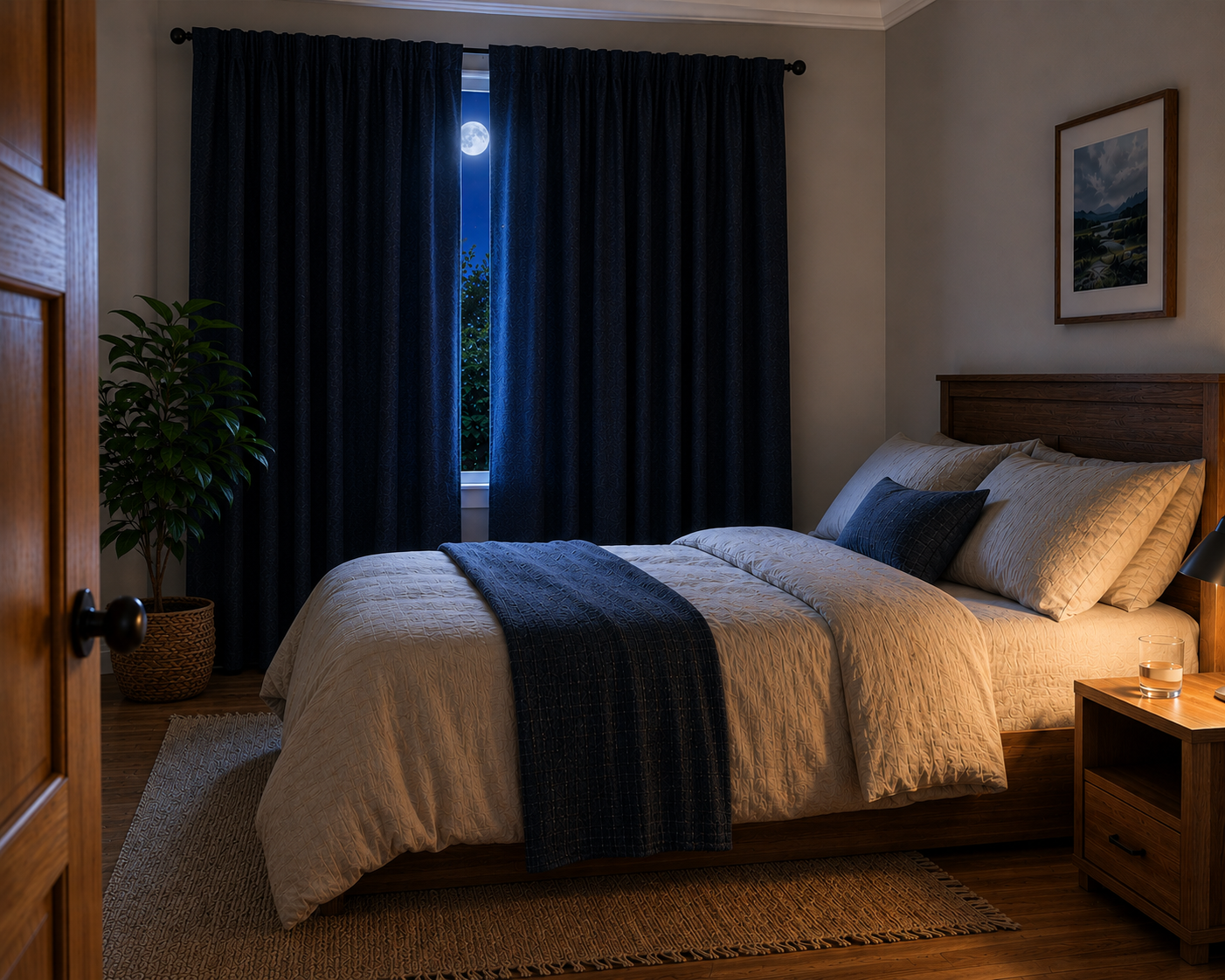
- Minute 8: Lights downSwitch off the overhead lights and use one or two warm, low lamps for the rest of the evening.
- Minute 9: Phone awayPlug your phone in to charge outside the bedroom, or at least across the room. If you use it as an alarm, a cheap clock or wake-up light removes the excuse.
- Minute 10: Fix the alarmSet the alarm for the same time as yesterday, weekends included, within an hour. Then do whatever you like (a book, a conversation, a stretch) in low light until you're sleepy.
Step two connects to a pattern we've covered before. Decision-making is at its weakest when you are tired, late in the evening and in the groggy first minutes after waking, which is why night-time food choices and snooze-button mornings go wrong so reliably. Deciding things the night before takes them off the table.
Why does a consistent wake time matter so much?
Because your body clock prepares for waking in advance, but only if it can predict when that will be. A wake time that's the same most days lets cortisol, temperature and alertness start rising before the alarm. An irregular schedule leaves you waking up mid-preparation, which feels like jet lag.
The long-term data on this is striking. In a study of 60,977 UK Biobank participants, published in Sleep, researchers measured sleep objectively using wrist accelerometers and followed people for a median of just over six years. Compared with the least regular sleepers, those in the more regular groups had a 20% to 48% lower risk of death from any cause, and sleep regularity predicted mortality better than sleep duration did. That's an observational finding, so regular sleepers may differ in other ways too. But it fits what the body clock research would predict.
The practical upshot is that the most important part of an evening routine for better sleep might be the 30 seconds spent setting tomorrow's alarm. A late Friday night is fine. A 10am Saturday lie-in followed by a 6:30 Monday alarm is jet lag you've given yourself. A Philips SmartSleep Wake-up Light can make that consistent wake time gentler on dark winter mornings, and it gets the phone out of the bedroom at the same time.
Is there an optional upgrade?
Yes, a warm shower or bath one to two hours before bed. It's outside the ten minutes, but it's one of the better-evidenced sleep habits there is. Warming the skin draws blood to the hands and feet, which then helps the body shed heat, and a falling core temperature is one of the body's signals that it's time to sleep.
A systematic review and meta-analysis in Sleep Medicine Reviews found that warm water at 40–42.5°C, taken one to two hours before bed for as little as ten minutes, shortened the time it took to fall asleep and improved self-rated sleep quality and sleep efficiency. Timing matters: too close to bed and you're still warm when you lie down. The bedroom itself matters too, and we cover temperature, light and noise in optimising your sleep environment.
Will it really double your morning energy?
Honestly, nobody has measured "morning energy" in a way that could double, and we'd be wary of anyone quoting you a percentage. What the research does show is that each step tackles one of the common reasons mornings feel awful: a slower start to sleep, a body clock pushed later by light, less sleep because of late scrolling, and waking at a time your body didn't expect.
Those effects stack. Ten minutes faster to sleep, twenty minutes less scrolling and a body clock that expects your alarm can turn a groggy, three-snooze morning into one where you're up on the first alarm. For a lot of people, that genuinely feels like twice the energy, even if no lab would put it that way.
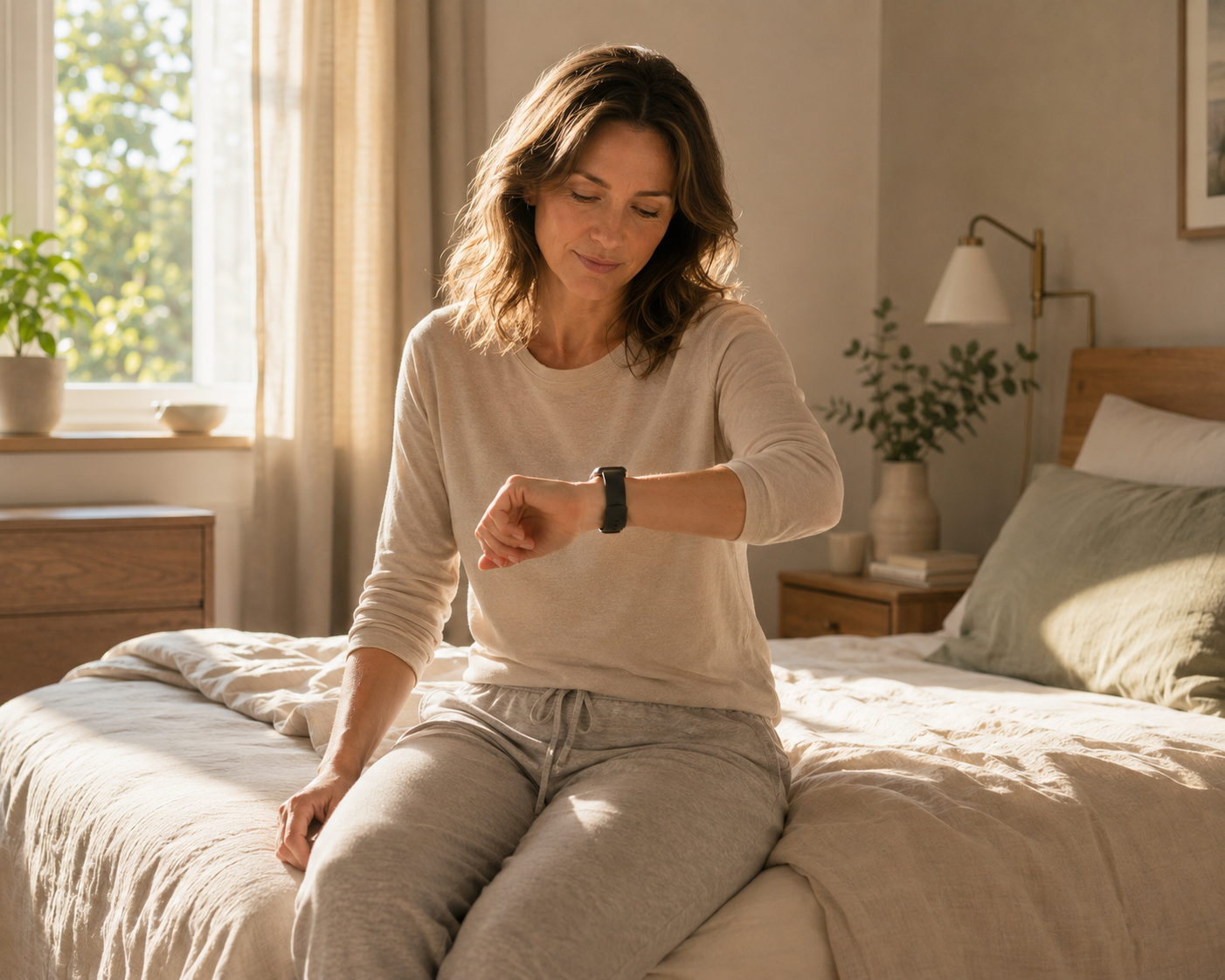
The fastest way to find out is to test it on yourself. If you wear a watch or ring, your sleep data already syncs to Health Mentor AI through Apple Health or Health Connect. Run the ritual for two weeks and the app will show whether your sleep, recovery score and resting heart rate actually moved, compared with your own baseline rather than a generic promise.
How do you make an evening routine stick?
Attach it to something you already do every night, keep the first version almost too easy, and track it. A routine that relies on remembering usually lasts about a week. One tied to an existing cue, like finishing the washing-up or brushing your teeth, has a much better chance.
- Anchor it. "After I load the dishwasher, I write tomorrow's list." The existing habit becomes the trigger.
- Start with one step. If ten minutes feels like a lot, do the to-do list only for the first week. It has the most direct evidence behind it.
- Leave cues in place. Notebook and pen on the pillow. Phone charger moved to the kitchen. Lamps plugged in and ready.
- Protect it on stressful days. Those are the nights it matters most. Our guide to switching off after a stressful day pairs well with this.
- Watch your caffeine cut-off. No evening ritual can beat a 4pm double espresso. See the science of caffeine timing.
Health Mentor AI can help with the sticking part too. Add the ritual as a daily task, build a streak, and let the AI mentor flag the link when your sleep score drops on the nights you skip it. Seeing that pattern in your own data is usually what turns a routine from a good intention into a habit. Get the app and try it tonight.
Frequently Asked Questions
What is a good evening routine for better sleep?
A good evening routine takes about ten minutes, starting roughly an hour before bed: write a specific to-do list for tomorrow, set up anything you need for the morning, switch to dim, warm lighting, charge your phone outside the bedroom and set your alarm for the same time as usual. Each step targets a common cause of poor sleep, such as a busy mind, bright light or an irregular schedule.
Does writing a to-do list before bed help you fall asleep?
In a sleep-lab study of 57 adults, people who spent five minutes writing a to-do list before bed fell asleep about ten minutes faster than those who wrote about tasks they had already completed. The more specific the list, the faster they fell asleep, which suggests that offloading unfinished tasks onto paper helps quiet the mind.
How long before bed should I stop using screens?
Aim to keep phones and tablets out of the last hour before sleep where you can. In a controlled study, reading on a light-emitting tablet before bed delayed sleep by nearly ten minutes, reduced REM sleep and left people less alert the next morning compared with reading a printed book. Charging your phone outside the bedroom makes this much easier.
Is it bad to sleep in at weekends?
A short lie-in is fine, but large swings in wake time act like mild jet lag. In a study of 60,977 adults, more regular sleepers had a 20% to 48% lower risk of death from any cause than the least regular sleepers, and regularity predicted mortality better than sleep duration. Keeping your wake time within about an hour every day helps your body clock prepare for mornings.
When should I take a warm shower or bath to improve sleep?
About one to two hours before bed. A meta-analysis found that water at 40 to 42.5°C at that time, for as little as ten minutes, shortened the time taken to fall asleep and improved sleep quality and efficiency. It works by helping the body shed heat afterwards, so bathing right before bed is less effective.
Scientific References
- Scullin et al. (2018), Journal of Experimental Psychology: General — The effects of bedtime writing on difficulty falling asleep: a polysomnographic study comparing to-do lists and completed activity lists
- Gooley et al. (2011), The Journal of Clinical Endocrinology & Metabolism — Exposure to room light before bedtime suppresses melatonin onset and shortens melatonin duration in humans
- Chang et al. (2015), PNAS — Evening use of light-emitting eReaders negatively affects sleep, circadian timing, and next-morning alertness
- Windred et al. (2023), Sleep — Sleep regularity is a stronger predictor of mortality risk than sleep duration: a prospective cohort study
- Haghayegh et al. (2019), Sleep Medicine Reviews — Before-bedtime passive body heating by warm shower or bath to improve sleep: a systematic review and meta-analysis
Products Mentioned in This Article
The ritual works with any notebook and any lamp you already own. These two just make the paper-not-phone part easier.
Moleskine Classic Notebook (Large, Ruled, Black)
A notebook that lives permanently on the bedside table for the five-minute to-do list. Keeping the list on paper means your phone can stay out of the bedroom, and a dedicated notebook becomes its own cue for the routine.
View on Amazon →Philips SmartSleep Wake-up Light (HF3520)
A bedside alarm that brightens gradually before your wake time and doubles as a warm, dimmable reading lamp in the evening. It replaces the phone as your alarm clock, which is the single easiest way to get the phone out of the bedroom.
View on Amazon →As an Amazon Associate, we earn from qualifying purchases. This comes at no additional cost to you.